We can perform some calculations quickly in our heads, but what happens when the numbers grow and become harder to keep track of?
In primary school, children learn the column method as a practical way to work through larger addition and subtraction calculations on paper and keep track of each place value.
So, what does the column method look like in practice? We’ll take a closer look at how it works, follow addition and subtraction step by step and answer a few common questions about written methods.
What Is the Column Method?
The column method is a written way to do calculations by arranging numbers vertically by place value. For addition and subtraction, we line up digits that have the same place value and work from right to left, starting with the ones.
To see what that means, let’s use 256 + 39 as an example. The number 256 has 2 hundreds, 5 tens and 6 ones, while 39 has 3 tens and 9 ones. We place 3 under 5 and 9 under 6 so that tens line up with tens and ones with ones.
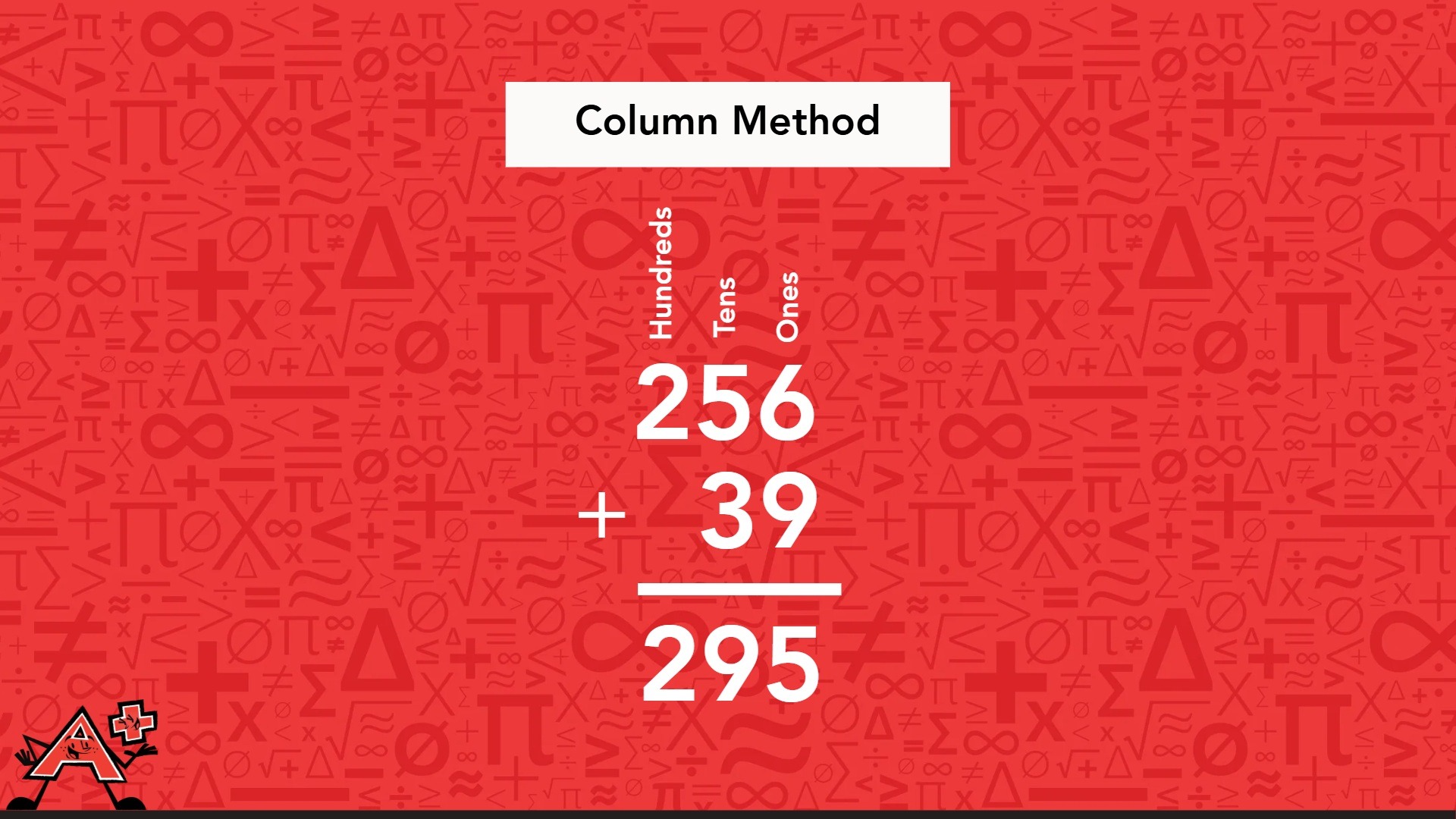
With the numbers lined up, we don’t have to keep the whole calculation in our heads. We can focus on one column at a time, which makes larger additions and subtractions much easier to work out on paper.
According to England’s national curriculum for mathematics, children use formal columnar addition and subtraction with numbers up to 3 digits in Year 3. They continue using the methods with increasingly large numbers as they progress through primary school.
📕 You May Also Like: What Is Place Value and Why Does It Underpin KS2 Maths?
How Does Column Addition Work?
Column addition can involve several things to keep track of as we work through a calculation, so learning the method step by step makes it much easier to follow.
Our instructors like to explain the how and why behind each procedure, so children can understand what they are doing as they work.
Here is a simple 4-step method we can use for column addition:
-
Step 1. Line up the numbers by place value. Write one number underneath the other so that ones are under ones, tens are under tens and hundreds are under hundreds.
-
Step 2. Add the ones. Start with the column on the far right. If the total is less than 10, write it underneath the ones column. If it is 10 or more, write the ones digit and regroup 1 ten into the tens column.
-
Step 3. Add the tens. Move one column to the left and include any ten regrouped from the ones. If the total reaches 10 or more again, write the tens digit and regroup 1 hundred into the hundreds column.
-
Step 4. Continue to the left. Repeat the same process for the hundreds and any remaining columns. Once we have added every column, the number underneath gives us the final sum.
Now let’s put the method into action.
Column Addition Example
We’ll use 356 + 279 to see how each step works and what changes when we need to regroup.
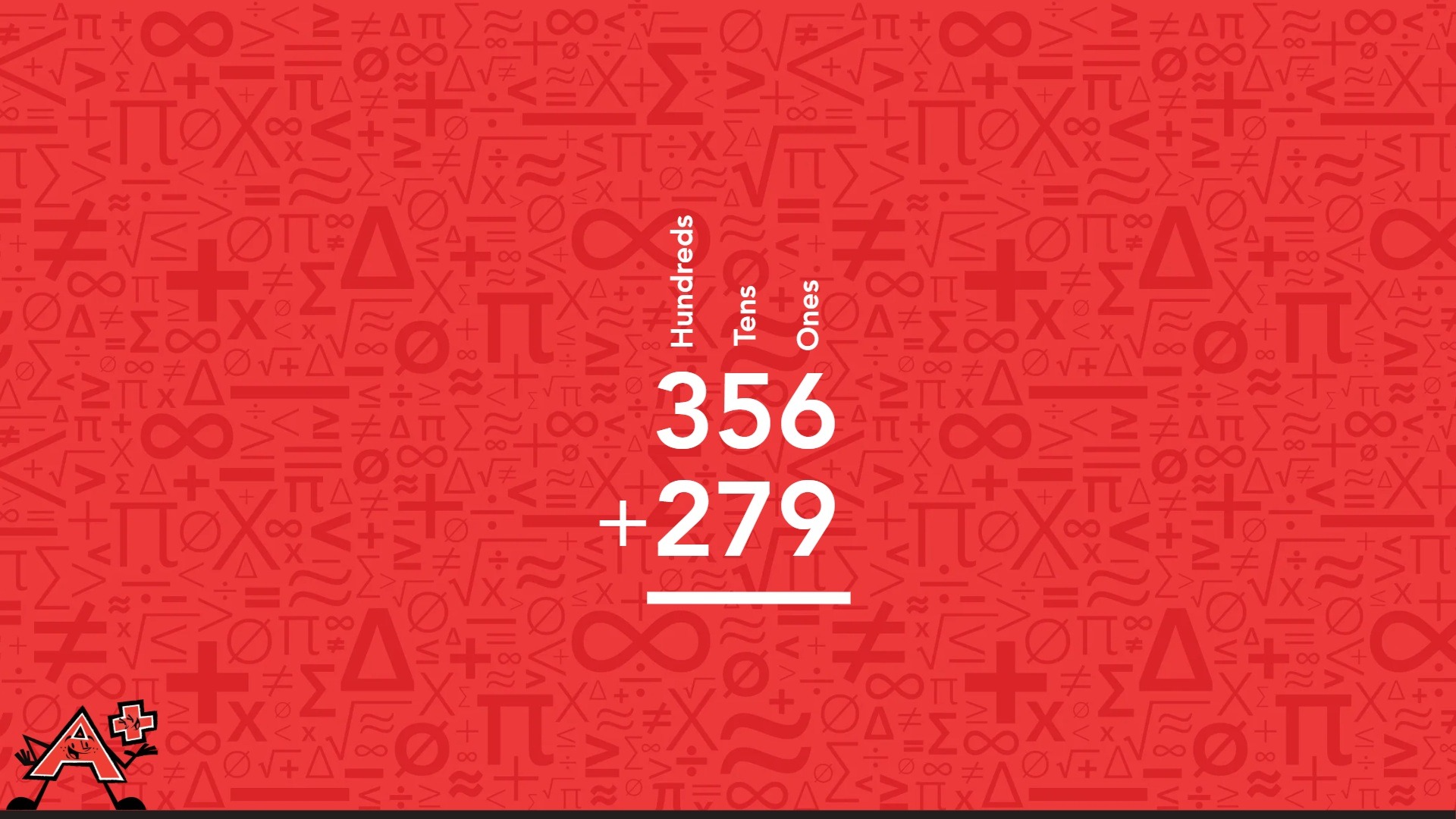
Step 1. Line up the numbers by place value.
We write 279 underneath 356, with hundreds under hundreds, tens under tens and ones under ones.
Step 2. Add the ones.
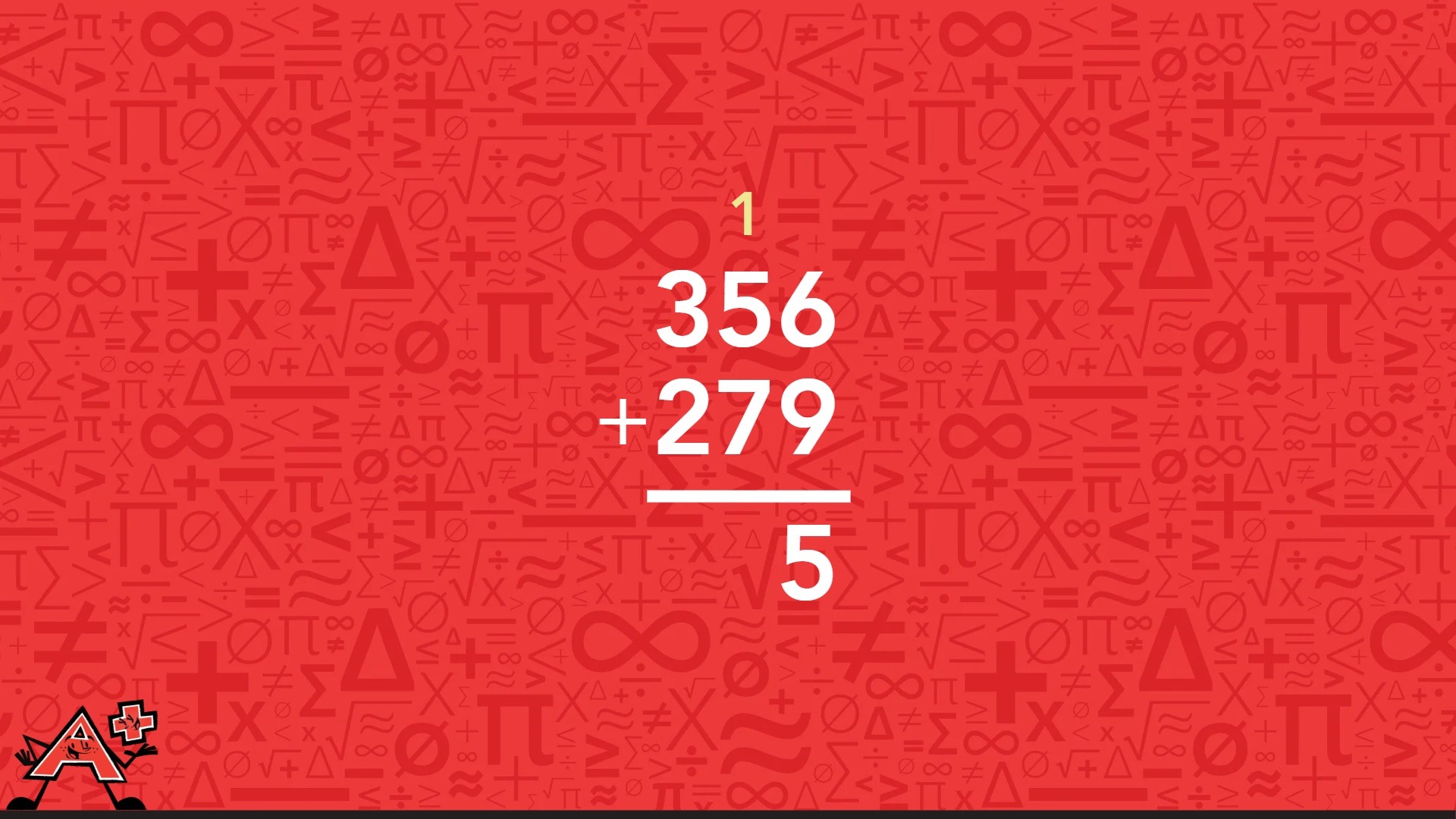
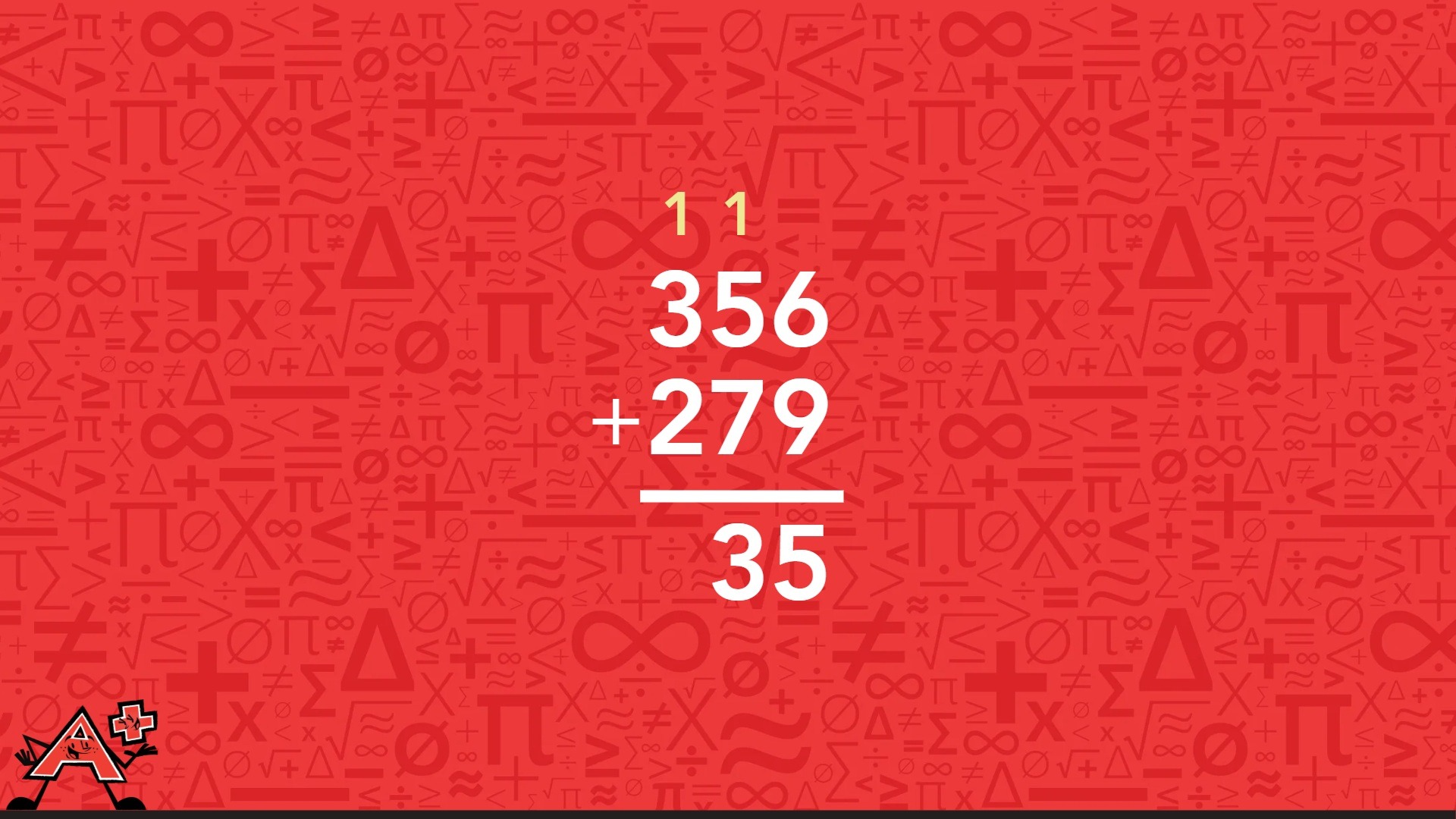
We start on the right with 6 + 9 = 15. Since 15 ones = 1 ten + 5 ones, we write 5 in the ones column and regroup 1 ten into the tens column.
Step 3. Add the tens.
Now we add 5 tens + 7 tens + 1 regrouped ten = 13 tens. Since 13 tens = 1 hundred + 3 tens, we write 3 in the tens column and regroup 1 hundred into the hundreds column.
Step 4. Continue to the left.
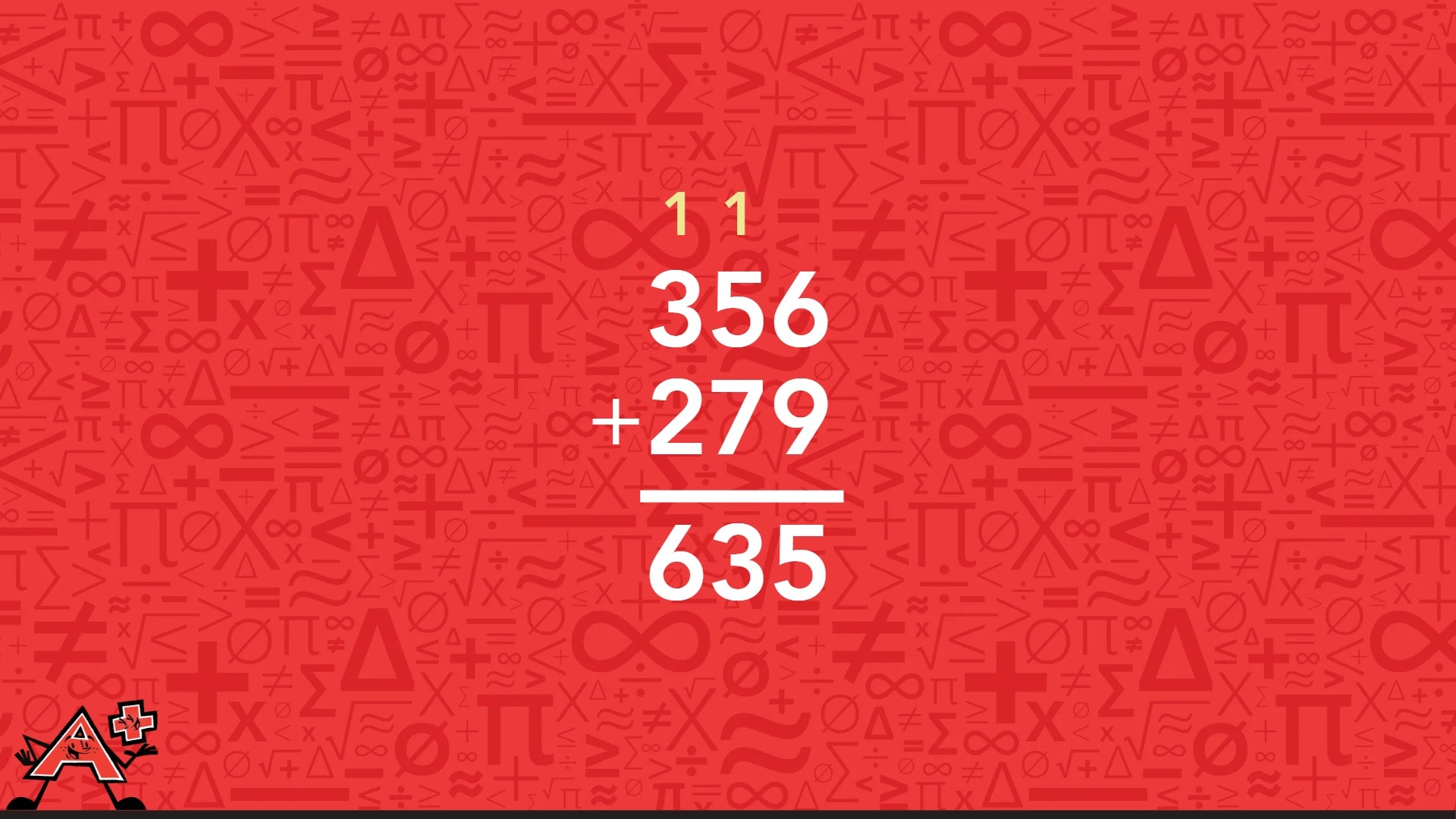
Only the hundreds remain. We add 3 hundreds + 2 hundreds + 1 regrouped hundred = 6 hundreds and write 6 in the hundreds column. Our completed calculation gives us 356 + 279 = 635.
📕 You May Also Like: Number Sense: The Foundation of Primary School Maths
How Does Column Subtraction Work?
We can solve column subtraction similarly to column addition, but there is one important difference. If the top digit in a column is smaller than the digit we need to subtract, we exchange from the next place-value column so we have enough to work with.
We can use the same 4-step method we followed for addition and exchange whenever the top digit is too small to subtract the digit underneath.
-
Step 1. Line up the numbers by place value. Write the numbers one underneath the other so that ones are under ones, tens are under tens and hundreds are under hundreds.
-
Step 2. Subtract the ones. Start with the column on the far right. If the top digit is large enough, subtract as usual. If it is smaller than the digit underneath, exchange 1 ten for 10 ones before subtracting.
-
Step 3. Subtract the tens. Move one column to the left, remembering that an exchange changes the value left in that column. If there are not enough tens to subtract the bottom digit, exchange 1 hundred for 10 tens.
-
Step 4. Continue to the left. Repeat the same process for the hundreds and any remaining columns. Once we have worked through every column, the number underneath gives us the difference.
Now let’s see how the method works in a subtraction calculation.
Column Subtraction Example
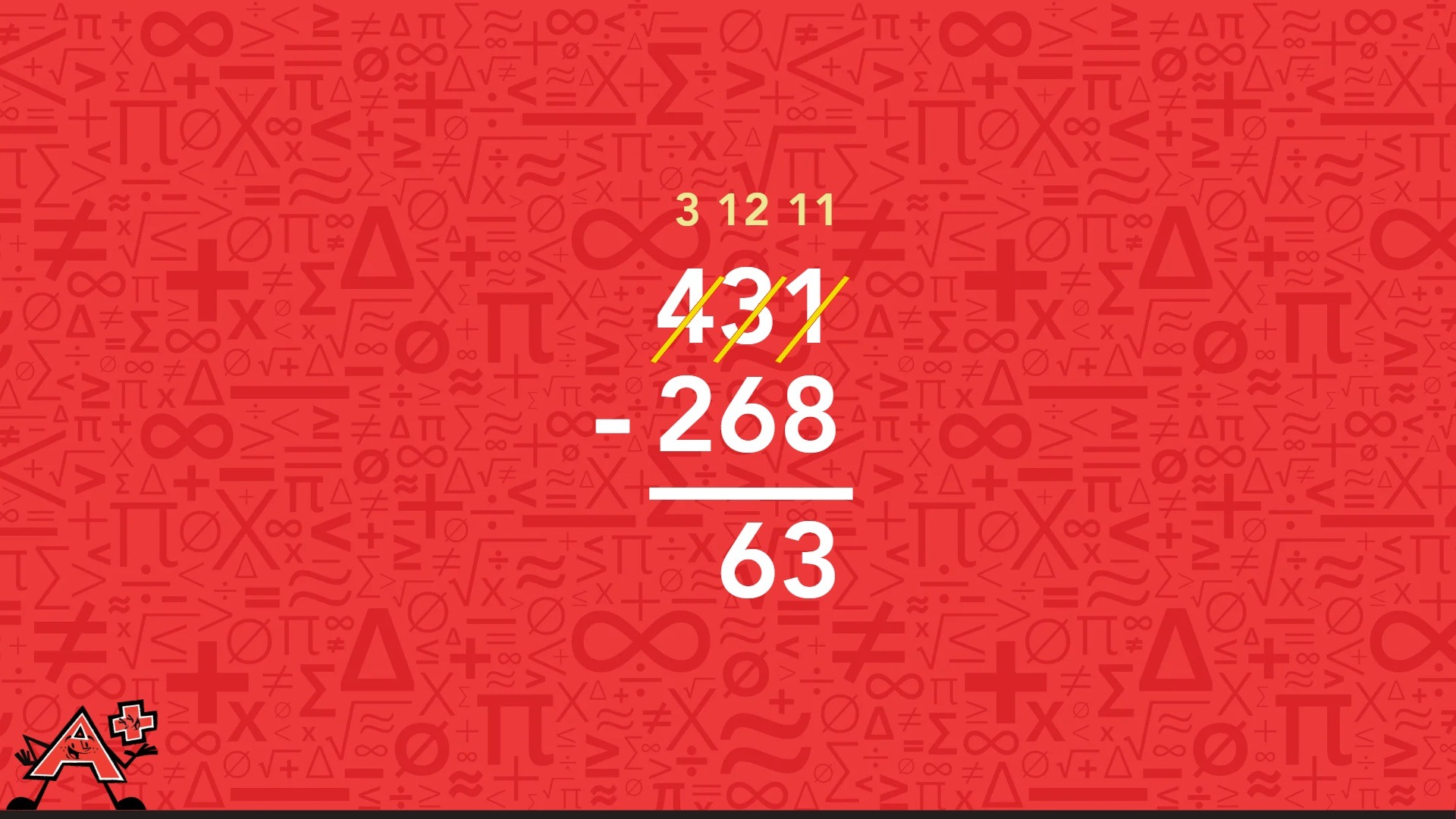
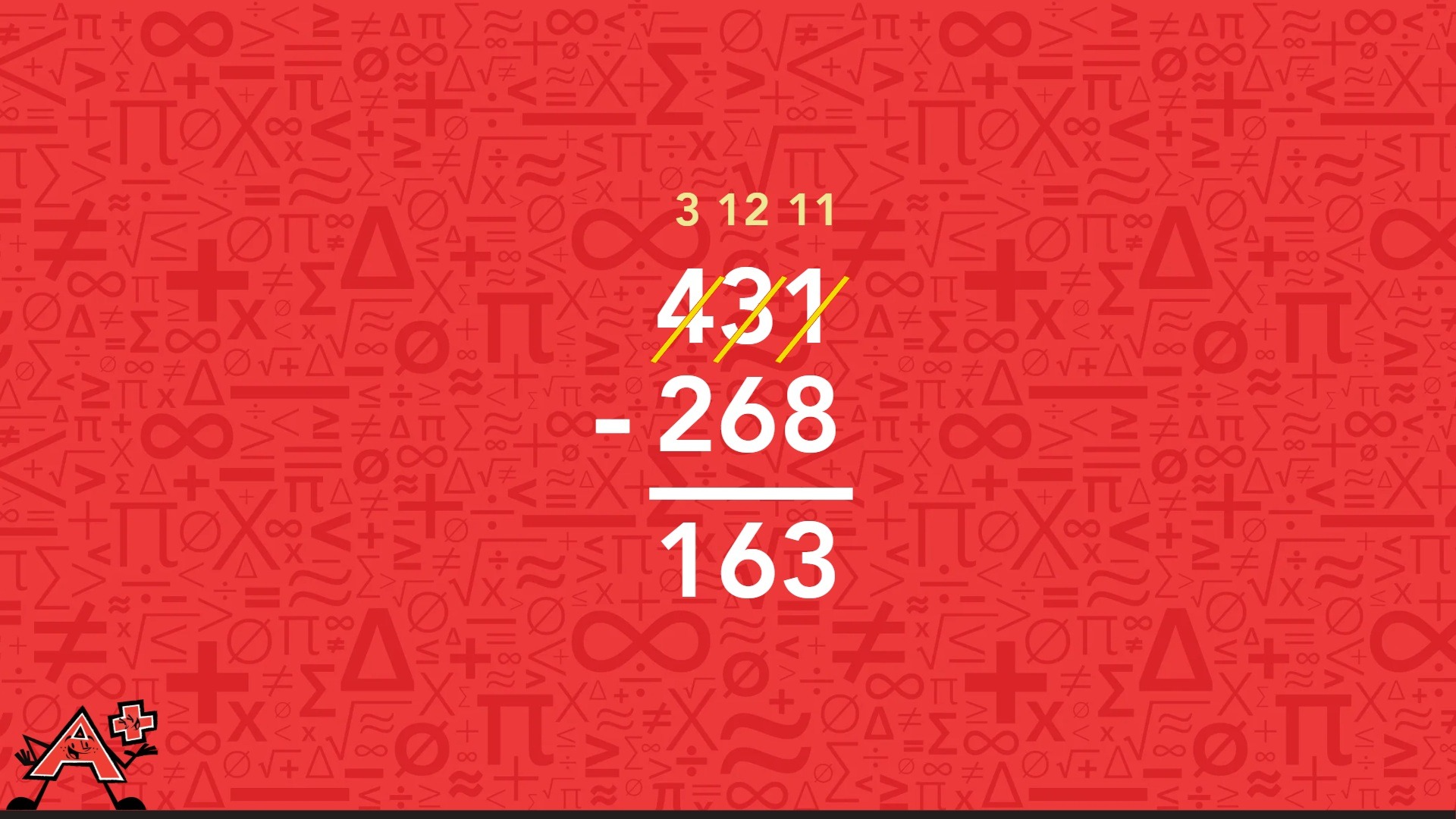
We’ll work through 431 − 268 step by step and see how the numbers change as we exchange between place-value columns.
Step 1. Line up the numbers by place value.
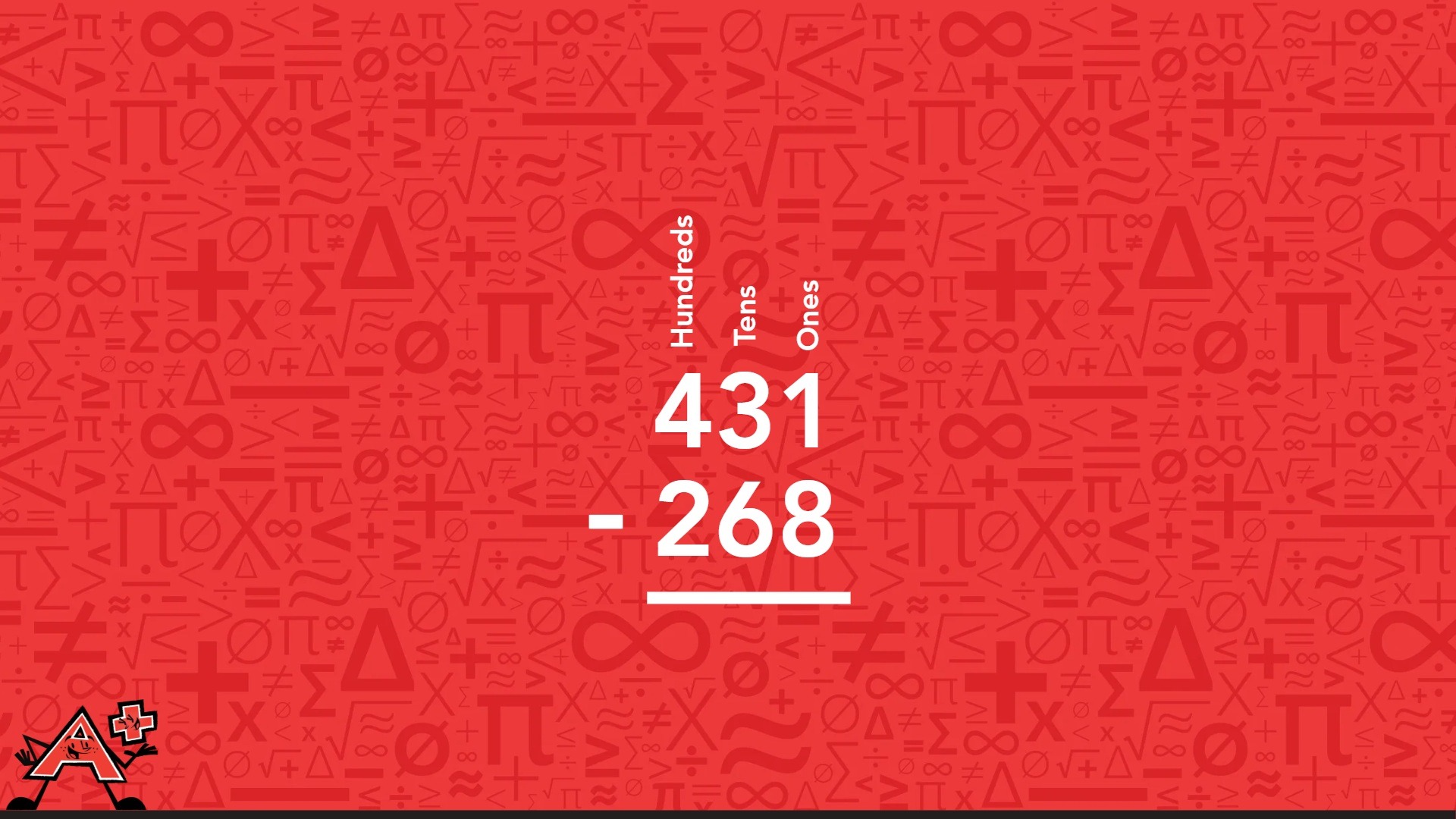
We write 268 underneath 431, keeping hundreds under hundreds, tens under tens and ones under ones.
Step 2. Subtract the ones.
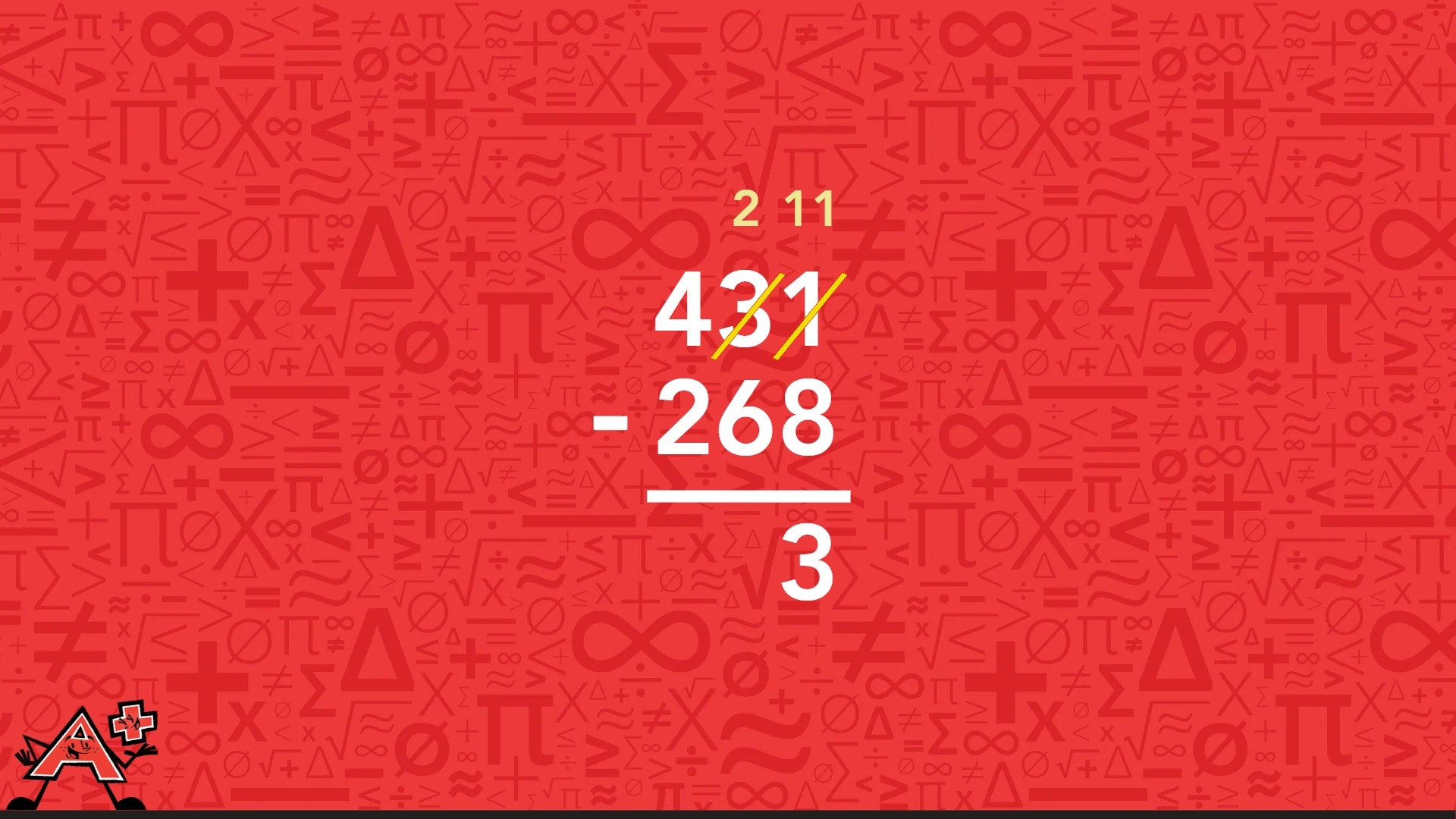
We cannot subtract 8 ones from 1 one, so we exchange 1 ten for 10 ones. The 3 tens become 2 tens and the 1 one becomes 11 ones. We can now calculate 11 − 8 = 3 and write 3 in the ones column.
Step 3. Subtract the tens.
We now have 2 tens, but we need to subtract 6 tens. We exchange 1 hundred for 10 tens, which leaves 3 hundreds and gives us 12 tens. We calculate 12 − 6 = 6 and write 6 in the tens column.
Step 4. Continue to the left.
We have 3 hundreds − 2 hundreds = 1 hundred, so we write 1 in the hundreds column. Our completed calculation gives us 431 − 268 = 163.
📕 You May Also Like: Mental Maths in Primary School: Definition, Strategies and Examples
FAQs About the Column Method
We’ve looked at how column addition and subtraction work, but a few more questions often come up once children start using written methods more widely in maths.
1. Can we use the column method for multiplication?
Yes, although the terminology can vary. Some UK schools and maths resources use column multiplication or the column method for multiplication, while England’s national curriculum for mathematics refers to the formal written methods as short multiplication and long multiplication.
The numbers still follow a vertical layout, but multiplication has its own procedure. Short multiplication is typically used when multiplying by a one-digit number, while long multiplication extends the written method to multiplication by two-digit numbers.
2. Does the column method work for division?
Not quite. Division uses its own formal written methods, which the national curriculum calls short division and long division rather than columnar division.
Short division uses a more compact written layout, while long division shows the intermediate calculations in more detail. Children first learn short division and later learn long division as they work with more complex calculations.
3. How can children check their answers after using the column method?
Children can use the inverse operation to check an addition or subtraction calculation. Addition and subtraction undo each other, so we can subtract to check addition and add to check subtraction.
For example, if our column addition gives us 356 + 279 = 635, we can check it with 635 − 279 = 356. For our subtraction example, 431 − 268 = 163, we can check the answer with 163 + 268 = 431.
England’s national curriculum specifically includes using inverse operations to check answers in Years 3 and 4.
📕 You May Also Like: How to Do Long Division: A Step-by-Step Guide
 At Mathnasium, we go far beyond traditional tutoring to help children understand and develop a love for maths.
How Mathnasium Helps Children Master the Column Method (+ Any Maths Topic)
Mathnasium is a maths-only learning centre dedicated to helping students of all skill levels excel in maths.
The column method is one of many written methods children encounter as their maths develops. Our instructors connect procedures like column addition and subtraction to number sense, so children understand what numbers mean and how they relate to one another as they work through each calculation.
No matter what your child is working towards, we can support them through the Mathnasium Method™, our proprietary teaching approach designed to build maths mastery through deep understanding.
Our approach includes:
-
Assessment and customised learning plans. Every child begins their Mathnasium journey with a diagnostic assessment that pinpoints their strengths and any gaps in their understanding. We use those insights to create a bespoke learning plan tailored to their individual needs and goals.
-
Teaching for understanding. Our specially trained instructors use mental, verbal, visual, tactile and written techniques. Different ways of presenting a concept give children more than one path to understanding, whether they benefit from visual tools, hands-on activities or verbal explanations.
-
Face-to-face instruction. Children work face-to-face with our instructors, following their bespoke learning plan at a pace that's right for them, both in-centre and online.
-
Confidence and engagement. Sessions include games and consistent celebration of progress, so children actively participate, solve problems and engage with maths instead of simply listening to a lesson. They build confidence alongside fluency and many develop a more positive relationship with maths.
The impact extends beyond the classroom:
-
94% of parents report an improvement in their child's maths skills and understanding
-
93% of parents report their child's improved attitude towards maths after attending Mathnasium
-
90% of students saw an improvement in their school grades
With over 1,250 centres worldwide, including over 40 across the UK, there is likely a Mathnasium centre near you.
Families across Brook Green, West Kensington, Brackenbury Village, Barons Court, Shepherd's Bush, Askew Village and Ravenscourt Park trust Mathnasium of Hammersmith to help their children build lasting maths confidence.
If the column method, or any other maths topic, is giving your child trouble, our team is ready to help.
✉️ Click Contact Us to get in touch with Mathnasium of Hammersmith
Not near Hammersmith?
📍 Find a Mathnasium Centre Near You


 020 8264 0180
 07702 667443