Summer is nearly here, and children are already counting down the days until the holidays. Family outings, swimming, time with friends, and an ice cream or two quickly replace school routines.
Maths lessons may go on holiday with us, but what happens to the maths skills children have been building all year?
We'll answer that question first, then share simple activities that turn everyday summer moments into fun maths practice without adding extra schoolwork to the holidays.

What Happens to Maths Skills Over the Summer Holidays
The summer holidays can affect maths differently from other school subjects. Children can lose the equivalent of around 1.8 months in maths computation, while reading skills tend to hold steady over the same period.
Why does that happen?
-
Calculation and fact recall are procedural skills that rely on regular practice. Every time children solve number problems, they strengthen the pathways that help them recall facts quickly and apply calculation methods with confidence. When that routine stops for several weeks, those skills naturally become less fluent.
-
Reading gets everyday reinforcement in a way maths does not. Stories, conversations, television, signs, and screens keep children using language throughout the holidays, even when they are not thinking about reading. Maths skills rarely get that same regular workout unless we deliberately create opportunities to use them.
-
Procedural maths skills are the first to fade. Because calculation methods and number facts depend so heavily on repeated practice, factual and procedural maths knowledge takes the hardest hit during the summer holidays.
Fortunately, many everyday summer routines already provide plenty of opportunities to keep maths skills active in fun, low-pressure ways.
📕 You May Also Like: Why Summer Learning Matters: Helping Children Stay Confident and Ready for September
6 Fun Maths Activities to Try This Summer
Let's turn summer moments into chances to practise maths together. We'll show you a few simple activities that fit naturally into family routines and days out, all without setting aside time for formal lessons.
1. Ice Cream Challenge
Trips to the ice cream van or a local café are a great way to practise mental arithmetic. Whether everyone orders an ice cream, a cold drink, or both, simple questions about the bill can quickly turn into a fun maths challenge.
Let's say everyone orders a little something. Three ice creams cost £3.80 each and two cold drinks cost £2.40 each. Start by asking how much the order costs altogether. Since there are several items at the same price, we first use multiplication to find the cost of each group:
We then add both amounts together to find the total: £11.40 + £4.80 = £16.20.
Many cafés also offer seasonal discounts, so you can build on the same example by asking how much a 10% discount would save. Since 10% is the same as one tenth, we find the saving by dividing £16.20 by 10, which gives £1.62.
Short challenges like this help children keep calculation methods and number facts active by using them regularly in everyday situations.
2. Picnic Maths Conversations
Picnics make it easy to practise fractions and sharing without adding anything extra to the day. Divide sandwiches, fruit, or pizza together, then turn those everyday moments into quick maths conversations.
Picture a pizza cut into 8 equal slices.
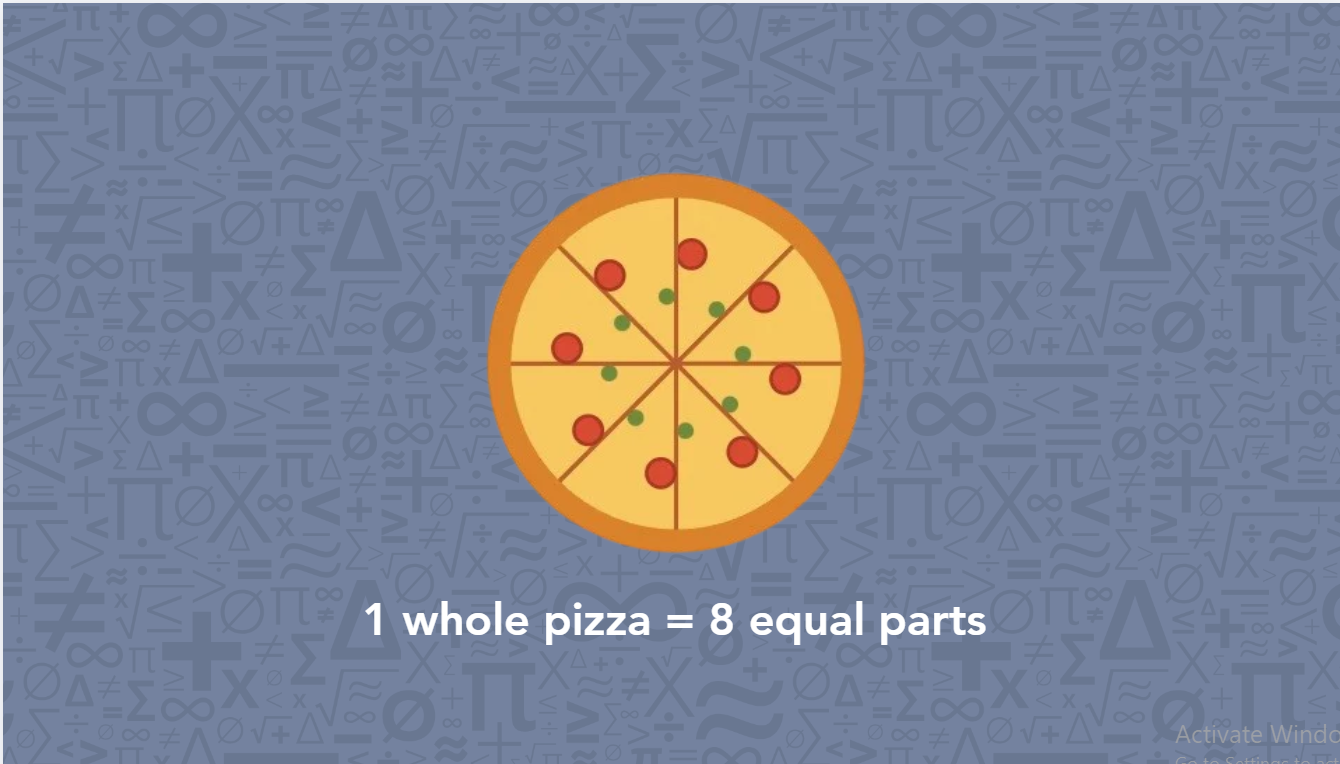
Then, three people each take 2 slices. Start by asking how many slices have been eaten altogether. Since each person eats the same amount, we add 2 + 2 + 2 = 6 slices.
Next, ask what fraction of the pizza has been eaten. Since 6 of the 8 slices are gone, the answer is \(\Large\frac{6}{8}\). We can then simplify the fraction by dividing the numerator and denominator by 2, which gives \(\Large\frac{3}{4}\).
One final question may come up: “What fraction is left?” Since 2 of the 8 slices remain, the answer is \(\Large\frac{2}{8}\), which simplifies to \(\Large\frac{1}{4}\).
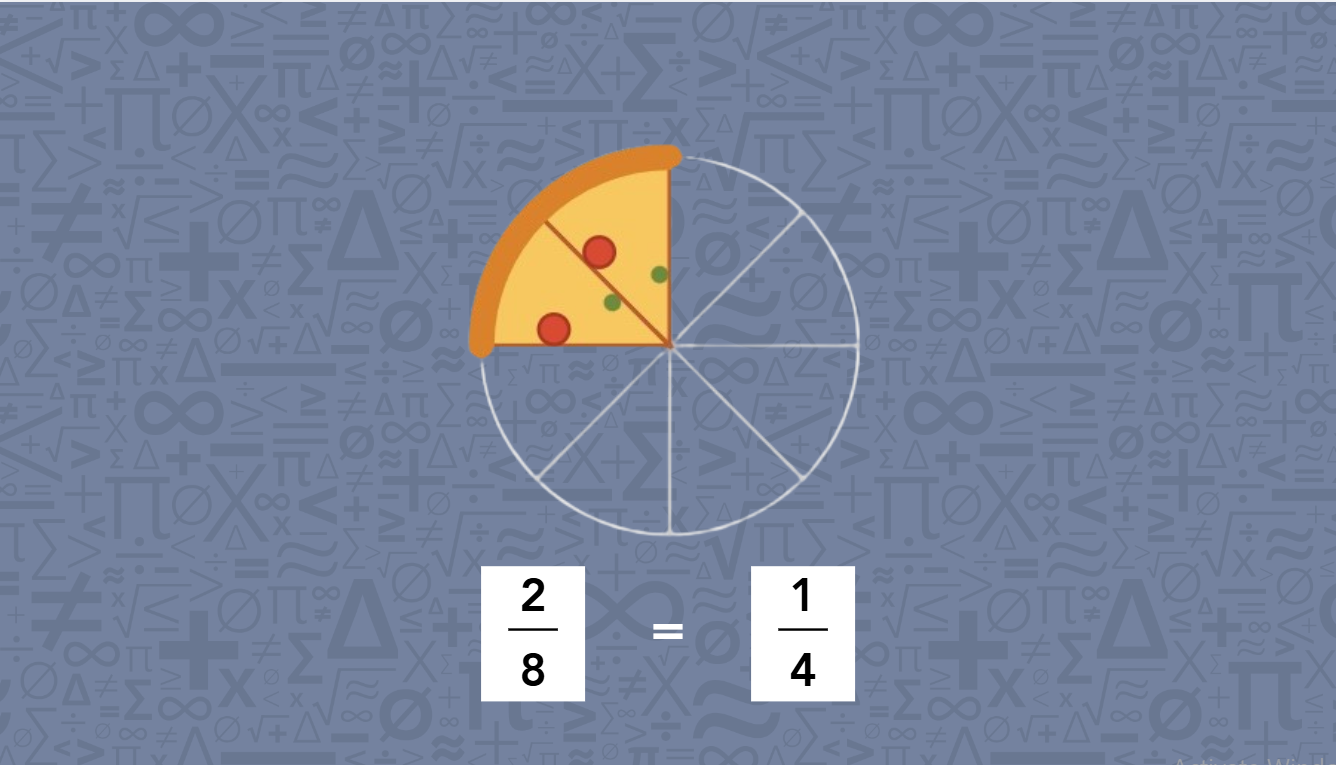
Who knew lunch could come with a little extra maths? There's no need to turn every picnic into a lesson, just enjoy the conversation when the opportunity comes along.
3. Road Trip Maths
Road trips are full of opportunities to practise time and distance. Rather than letting the journey pass with everyone glued to their phones, turn a few numbers from the road into simple maths questions you can solve together.
Suppose your destination is 120 miles away. Start by asking how long the journey will take if you're travelling at 60 mph. Since the car travels 60 miles per hour, we divide the total distance by the speed: 120 ÷ 60 = 2 hours.
Once you've travelled 45 miles, you can build on the same example by working out how far there is still to go. We already know the total distance, so we subtract the miles we've travelled: 120 − 45 = 75 miles.
Road trips already come with plenty of numbers. We just need to turn one or two of them into a maths challenge.
4. Maths on a Local Walk
Walks to Worcester Cathedral or around other favourite local spots can naturally create opportunities to practise estimation and mental calculation.
Imagine you're walking from the car park to Worcester Cathedral. This time, ask your child to estimate how many steps it will take to reach the main entrance, then count the steps together once you arrive. Let's say they guess 200 steps and the final count is 347.
Now ask how many steps the estimate was off by. We can find the difference by subtracting the estimate from the final count: 347 − 200 = 147 steps.
Older children can take the challenge one step further by comparing the estimate with the final number of steps. We do that by dividing the estimate by the actual number first, then multiplying by 100 to express the result as a percentage:
-
200 ÷ 347 ≈ 0.5764
-
0.5764 × 100 ≈ 57.6%
The next time you visit a different local attraction, see if your child can make an even closer estimate before you count the final result.
5. Boat Count
Canals and rivers make great places to practise counting, multiplication, and prediction. If your summer plans include a visit to Diglis Lock, try turning passing boats into a quick family maths challenge.
Count how many boats pass through the lock in 10 minutes. Let's say you count 4 boats. We can use that number to predict how many boats might pass in 30 minutes. Since 30 minutes is three times as long as 10 minutes, we multiply: 4 × 3 = 12 boats.
Now keep counting to see how close your prediction was. If 10 boats pass through in the end, we can work out the difference by subtracting: 12 − 10 = 2 boats.
Every day is different, so comparing your estimate with the final number is all part of the fun.
6. Family Sports Challenge
Open spaces like Worcester Racecourse are perfect for a family running or walking challenge. Mark out a short circuit and see how many laps everyone can complete.
Suppose one lap is 250 metres long. If someone completes 3 laps, we can find the total distance by multiplying the length of one lap by the number of laps: 250 × 3 = 750 metres.
Now build on the same idea. If someone completes 5 laps instead, we solve it the same way: 250 × 5 = 1,250 metres.
One final question may follow: “How much farther is 5 laps than 3 laps?” We subtract the two distances: 1,250 − 750 = 500 metres.
The only question left is who's ready for another lap and a new family challenge.
📕 You May Also Like: Multiplication Tables Check 2026: A Guide to Year 4 Times Tables
Where to Find Maths This Summer
We've shared a few of our favourite summer maths activities, but they're only the beginning. Keep an eye out for these everyday opportunities during the holidays.
|
Summer moment
|
Look for maths in...
|
Maths skills
|
| At the beach |
Shells, buckets, waves, time |
Counting, patterns, estimation |
| Cooking together |
Measuring ingredients, recipes |
Fractions, measurement |
| Shopping |
Prices, discounts, special offers |
Money, percentages |
| Playing sport |
Scores, timing, distance |
Addition, averages |
| Gardening |
Plant spacing, counting seeds |
Multiplication, measurement |
📕 You May Also Like: Summer Maths Programme Launched to Prevent Summer Learning Loss and Build Confidence
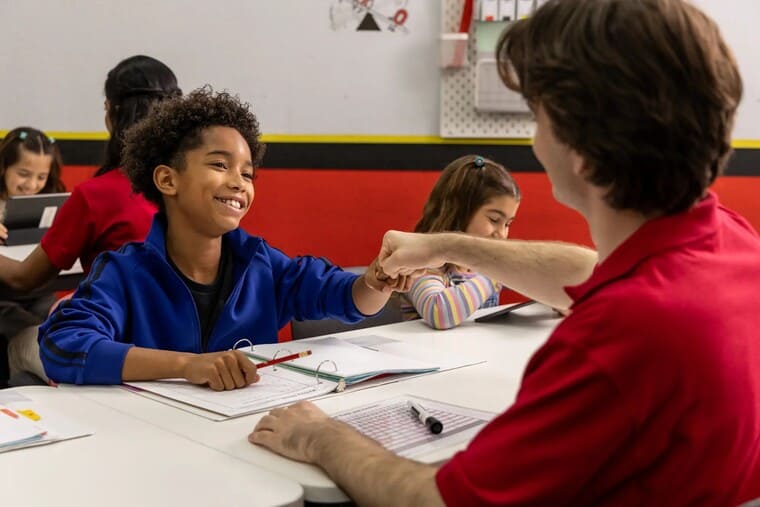 At Mathnasium, summer is another opportunity to keep maths fun, engaging, and part of everyday life.
How Mathnasium Supports Students Through the Summer
Mathnasium is a maths-only learning centre dedicated to helping students of all skill levels excel in maths.
Our Summer Programme is designed to help children make the most of the school holidays. Flexible sessions combine personalised maths learning with games and hands-on STEM activities, which help students keep their skills active, build confidence, and return to school ready for the new term.
Each programme we offer is built around the Mathnasium Method™, our proprietary teaching approach, which includes:
-
Assessment and personalised learning plans. Every student begins their Mathnasium journey with a diagnostic assessment that identifies their current skills, strengths, and gaps. From there, we build a personalised learning plan around their goals.
-
Teaching for understanding. Our specially trained instructors use natural language and a mix of verbal, visual, mental, tactile, and written techniques, so each concept lands properly before we move on.
-
Problem-solving and critical thinking. We give students time to work through problems independently first. That productive struggle builds trust in their own reasoning, and when we do step in, we explain both how and why, so the thinking carries beyond the session.
-
A fun, encouraging environment. Sessions include games, earned rewards and regular celebration of progress, and students build confidence alongside fluency along the way.
The impact extends beyond the classroom:
-
94% of parents report an improvement in their child's maths skills and understanding
-
93% of parents report their child's improved attitude towards maths after attending Mathnasium
-
90% of students saw an improvement in their school grades
With over 1,250 centres worldwide, including over 40 across the UK, there is likely a Mathnasium near you.
Families across Worcester and nearby areas, including Claines, St John's, Barbourne, Northwick, Bevere, Droitwich Spa and Malvern, trust Mathnasium of Worcester to help their children build lasting maths confidence.
If summer maths practice, or any other maths concept, is giving your child trouble, our team is ready to help.
📅 Book a Free Assessment at Mathnasium of Worcester
Not near Worcester?
📍 Find a Mathnasium Centre Near You


 01905 672 304