As we move through October and approach the autumn half-term break, it's a good opportunity to take stock of how your child is getting on with maths.
With school lessons continuing after the break, you may be looking for ways to help them catch up on skills they're finding difficult or simply see how they're adjusting to the pace of the new school year.
A closer look at the maths your child is learning can help you decide where to focus your support. We'll look at how to identify the skills that need attention, share practical ideas for practising them at home and recognise when extra support may be useful.
What Does Catching Up in Maths After Half-Term Involve?
Children can catch up in maths after half-term by working on the knowledge and skills they haven't fully understood or mastered, while continuing with what they're learning at school.
Depending on where they need help, this may involve learning a concept more thoroughly, practising a skill or revisiting earlier knowledge that supports a new topic.
October half-term offers a natural point to reflect on your child's progress, as it usually marks a one-week break between the two parts of the autumn term. Families in Blackheath can check the dates through Lewisham Council or their child's school, as term dates may vary.
Because primary maths concepts often build on earlier knowledge, simply giving children more questions to practise may not help if they haven't fully understood the foundations. To see what kind of support your child needs, consider two connected aspects of their maths learning:
-
Conceptual understanding: Does your child understand how and why the maths works, including the earlier knowledge behind it?
-
Procedural fluency: Can they use the relevant methods accurately and increasingly independently, with enough practice to become more confident?
Both can help you distinguish between a skill your child needs to practise and a mathematical idea they need to understand more fully before moving forward.
📕 You May Also Like: First Half-Term Maths in Primary School: A Parent’s Guide
Which Maths Skills Might Your Primary School Child Need to Catch Up On?
Your child's current maths lessons can help you identify which skills deserve attention after half-term. Number sense, place value and calculation skills are particularly useful to check, as children rely on them across many areas of primary maths.
What your child needs to work on will also depend on their year group and the topics they're studying. The Department for Education's (DfE) mathematics curriculum provides a broad progression across primary school:
-
Key Stage 1 (Years 1–2): Counting, number bonds, place value, addition and subtraction form much of the early number work. Children also begin learning multiplication, division, simple fractions, shapes and measurement. Knowledge gaps to check: number bonds to 20 (expected by the end of Year 2).
-
Lower Key Stage 2 (Years 3–4): Children extend their place value knowledge, work with larger numbers and develop their use of the four operations and multiplication and division facts. They also study fractions, decimals, measurement and geometry. Knowledge gaps to check: multiplication tables up to 12 × 12 (expected by the end of Year 4) and place value with larger numbers.
-
Upper Key Stage 2 (Years 5–6): Maths includes increasingly complex calculations, fractions, decimals, percentages, geometry and measurement. Year 6 introduces ratio and proportion, along with the language of algebra. Knowledge gaps to check: written methods for all four operations (expected by the end of Year 6).
Children won’t necessarily have covered all these topics by October half-term, as the curriculum sets out content year by year and schools decide when to teach each topic within a key stage.
Even within one topic, your child may understand certain skills well but still struggle with another. For example, they might recognise fractions of shapes correctly but find it difficult to calculate fractions of quantities. Both involve fractions, but children use different knowledge and methods to solve them.
If your child is finding a particular topic difficult, you can use their schoolwork to see which questions are causing trouble and ask their teacher for guidance on the skills to revisit at home.
📕 You May Also Like: What Is Place Value and Why Does It Underpin KS2 Maths?
4 Ways to Help Your Child Catch Up in Maths at Home
Parents can help their children catch up in maths through everyday conversations, practical activities and opportunities to work through problems together. Tools like drawings and short activities can make mathematical ideas easier to discuss, without turning home practice into another school lesson.
We suggest four ways to support your child as they work on skills that may need more attention.
1. Start With a Related Skill
If your child struggles with a calculation, they may need help with an earlier skill that the calculation builds on. You can look at the steps involved to see where they begin having difficulty, then work through that part together before returning to the original question.
For instance, if your child is learning multiplication and finds 3 × 4 difficult, they may need to revisit repeated addition, where the same number is added several times.
You could begin with three groups of four and help your child count how many there are altogether. They can add four for each group and write 4 + 4 + 4 = 12.
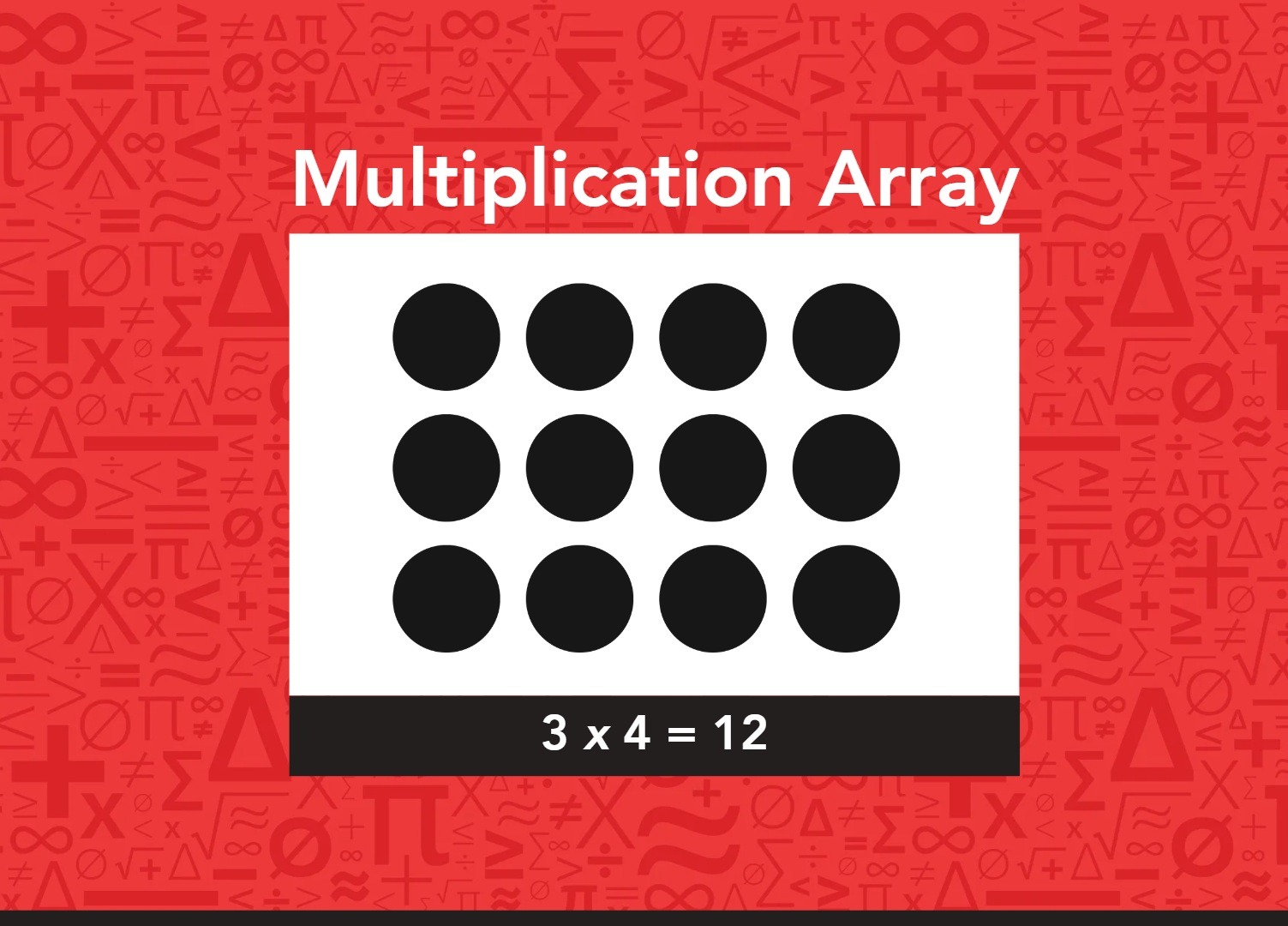
Now they can see that three groups of four can also be written as 3 × 4 = 12. Your child can use repeated addition to understand other multiplication facts before becoming confident enough to recall them without counting.
2. Use a Familiar Way to Explain the Maths
Your child may understand a mathematical idea more readily when they can see or handle the quantities involved. Physical objects or a simple drawing can make an unfamiliar calculation easier to follow.
Suppose your child is learning about place value and finds it difficult to understand why the same digit can have different values depending on its position. You could use place value blocks or a simple place value chart to compare 2,345 and 2,435.
Start with 2,345 and show two thousands, three hundreds, four tens and five ones. Then switch the three and four to represent 2,435. Your child can see that the three now represents 30 instead of 300, while the four represents 400 instead of 40.
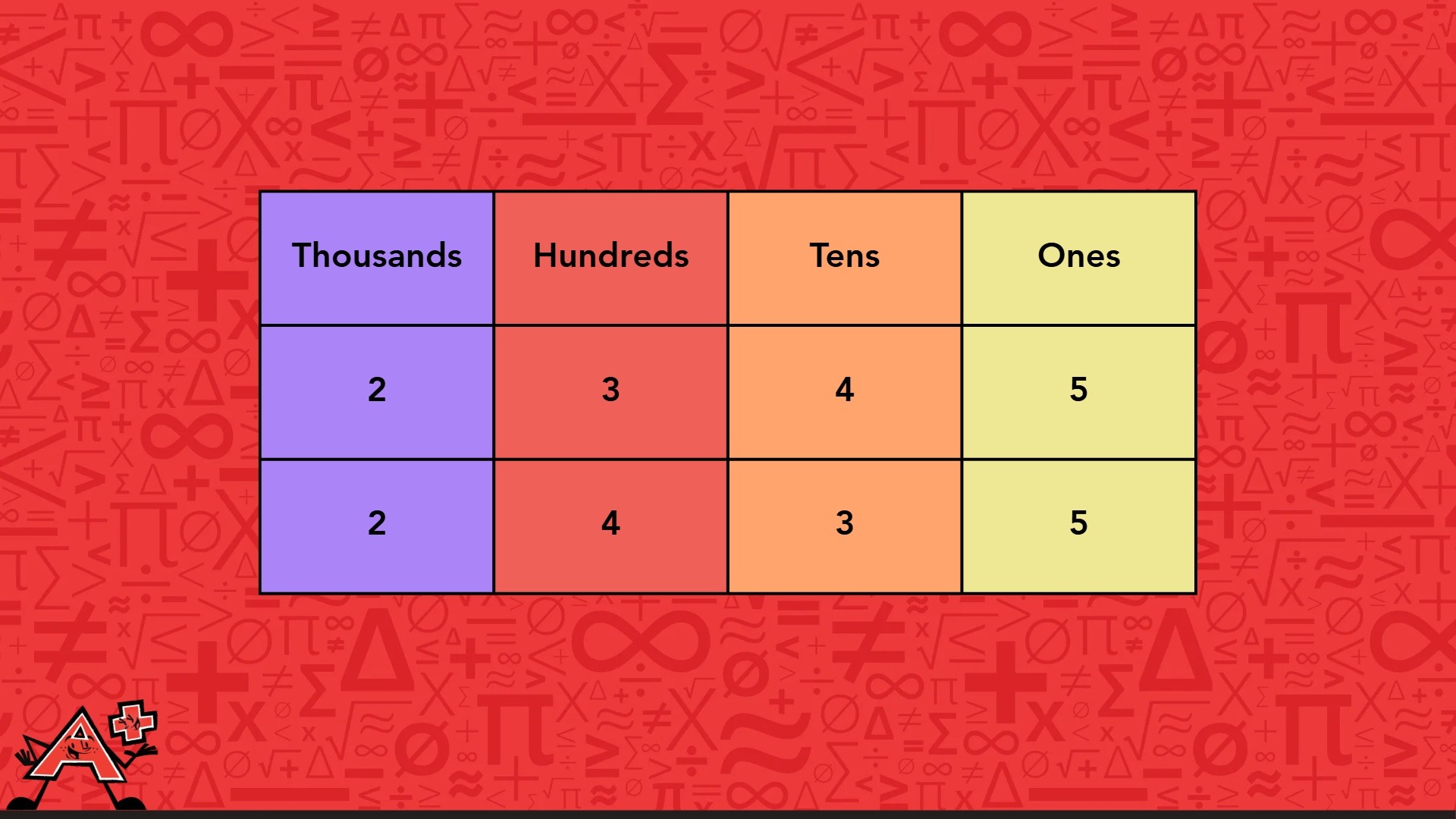
You can then write both numbers and compare their expanded forms, 2,000 + 300 + 40 + 5 and 2,000 + 400 + 30 + 5, to connect what your child sees to the written maths.
3. Give Your Child Manageable Opportunities to Practise
Practice typically works best when your child has enough time to think through a skill without feeling rushed. You can keep it manageable by concentrating on one skill at a time and introducing small variations as they become more comfortable.
For a younger child learning to use number bonds to add across ten, try a make-ten activity with a calculation such as 7 + 6. You could use buttons to show seven and six, then help your child see that seven needs three more to reach ten.
They can split the six buttons into two groups of three, add the first three to make ten and then add the remaining three to get 13.
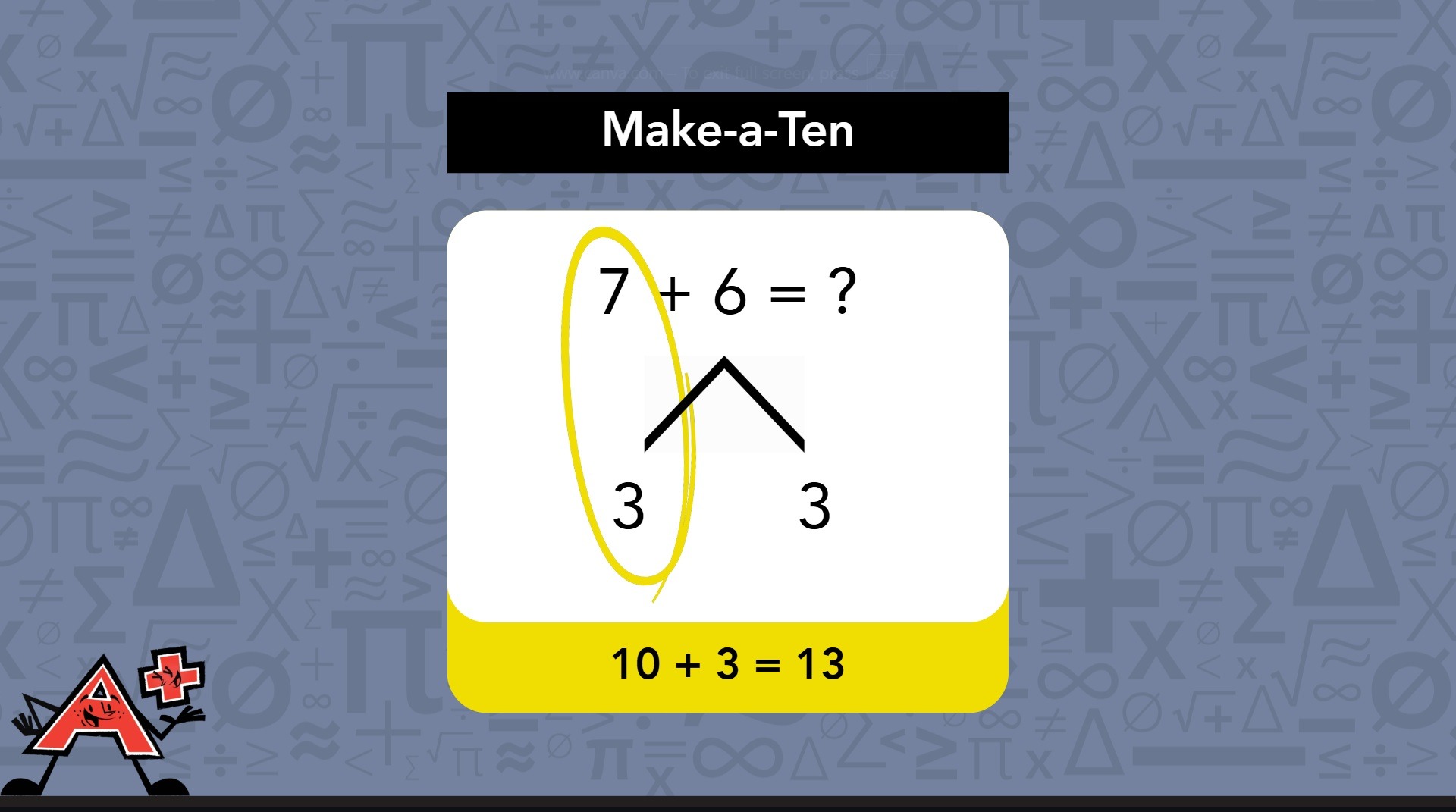
On another occasion, you could try 8 + 5 with the buttons, letting your child work out how to reach ten before adding what remains. You can also use written questions such as 7 + □ = 10 or 8 + □ = 10 to practise the number bonds your child needs for these calculations.
Keep the activity brief and return to it another day, using different numbers or asking your child to work through an addition without the buttons. That way, your child practises the same skill without every attempt being identical.
For more variety, NRICH Maths at Home offers primary maths games and activities that families can use together.
4. Revisit the Skill and Check Progress
Your child may complete a question successfully while an explanation or example is still fresh in their mind. You can check how well they remember the skill by returning to it on another day with a different question.
For example, if your child has been learning about fractions of an hour, you could begin with the fact that one hour contains 60 minutes. To find one-half of an hour, they need to split those 60 minutes into two equal parts. Each part contains 30 minutes, so half an hour is 30 minutes. You can follow the same approach to show that a quarter of an hour is 15 minutes.
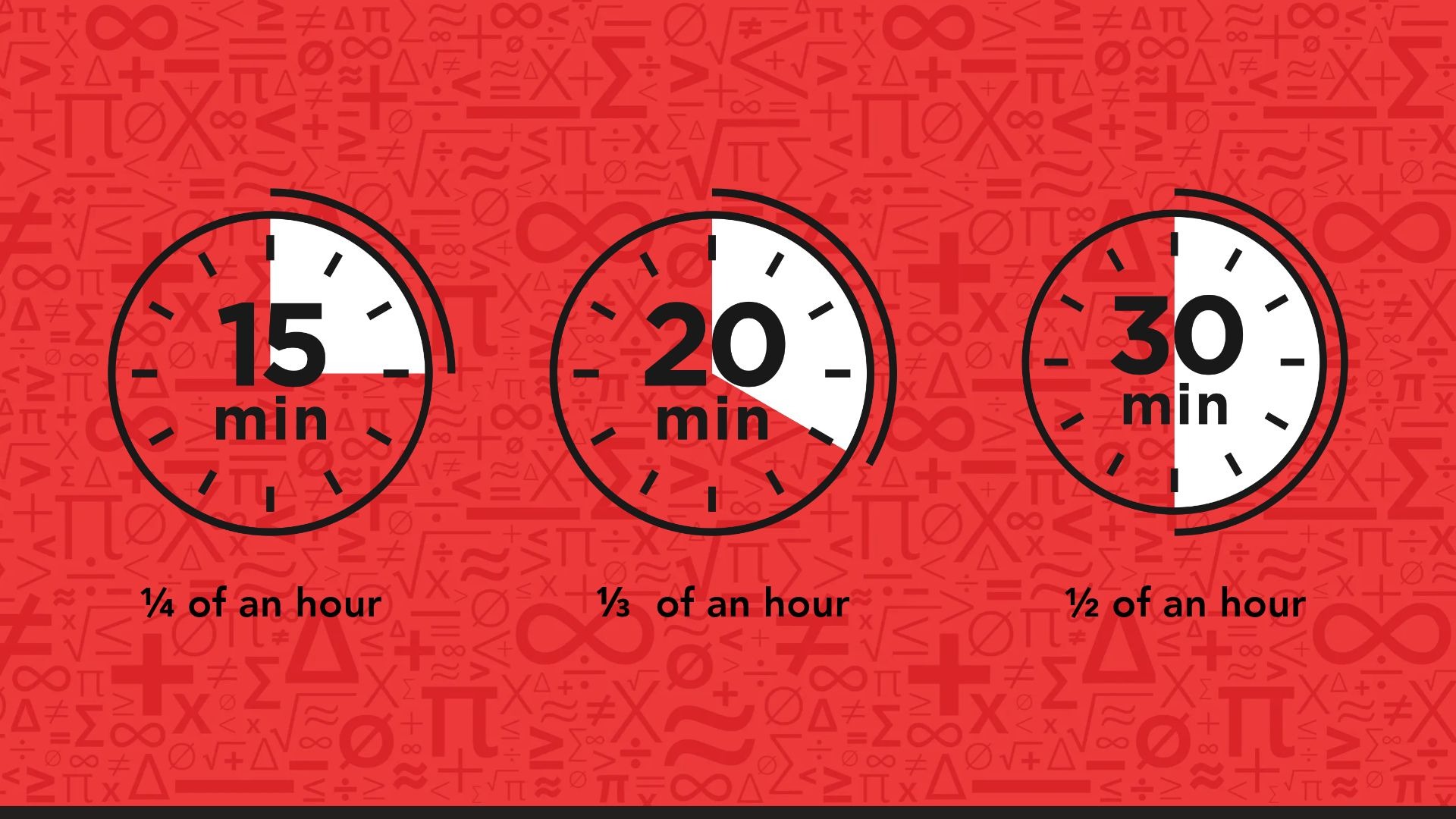
You could return to the topic a few days later and see whether your child can work out how many minutes make three-quarters of an hour without your earlier explanation. For an older child familiar with thirds, you could also try one-third of an hour.
Their answers and explanations can show whether they remember the relationships and can apply them to a slightly different question.
📕 You May Also Like: Why Fractions, Decimals & Percentages Confuse Your Child
When Might Your Child Need Additional Maths Support?
Your child may benefit from additional maths support if difficulties with a topic continue as school lessons move forward, particularly when revisiting earlier skills and practising at home haven't helped.
You might notice that they can solve a question with your guidance but find a similar one difficult on their own. Some struggles may become clearer as you look at patterns in your child's work:
-
Patterns of errors: Similar mistakes appear across different types of questions that rely on the same mathematical concept.
-
Reliance on prompts: Your child needs frequent reminders about which method to use or what to do next, even with familiar questions.
-
Difficulty with earlier knowledge: Skills they previously learned remain difficult to apply in their current schoolwork.
-
Growing frustration: Maths tasks increasingly lead to hesitation, avoidance or a loss of confidence.
Your child's teacher can also help you establish whether the difficulties are affecting their current lessons and what support may be appropriate. You can use their feedback, alongside what you've noticed at home, to decide whether your child might benefit from more structured maths support.
📕 You May Also Like: How to Talk to Your Child's Maths Teacher When You're Worried About Progress
 At Mathnasium, we support children at every stage of their maths journey, building confidence, understanding and long-term progress.
How Mathnasium Helps Children Catch Up, Keep Up and Get Ahead in Maths
Mathnasium is a maths-only learning centre dedicated to helping students of all skill levels excel in maths.
Whether your child needs to catch up on earlier maths skills, keep up with their current primary school lessons or explore more challenging topics, we build on what they already understand to help them progress.
Our primary school maths support covers topics from addition and subtraction to multiplication, division and fractions. We can also help children understand their maths homework, so they can apply what they're learning to their schoolwork.
We deliver this support through the Mathnasium Method™, our proprietary teaching approach designed to help children build maths mastery through deep understanding. Our approach includes:
-
Assessment and customised learning plans. Every child begins their Mathnasium journey with a diagnostic assessment that identifies their strengths and gaps in their maths knowledge. We use those insights to create a bespoke learning plan based on what they already know and what they need to learn next.
-
Teaching for understanding. Our specially trained instructors use mental, verbal, visual, tactile and written techniques to explain how and why maths works. Children develop their understanding of mathematical concepts and learn to apply that knowledge to different problems.
-
Face-to-face instruction. Children work directly with specially trained instructors at a pace that suits them, both in-centre and through live online sessions. They follow their own bespoke learning plan in a caring and fun group environment.
-
Confidence and engagement. Our instructors use games, activities and encouragement to keep children involved in their learning. As children develop their skills and understanding, they have opportunities to approach maths with greater confidence.
The results show what this approach can achieve:
-
94% of parents report an improvement in their child's maths skills and understanding
-
93% of parents report their child's improved attitude towards maths after attending Mathnasium
-
90% of students saw an improvement in their school grades
With over 1,250 centres worldwide and over 40 across the UK, there is likely a Mathnasium centre near you.
Families across Blackheath, Kidbrooke, Lee, Greenwich, Deptford and Lewisham trust Mathnasium of Blackheath to help their children build lasting maths confidence.
If your child needs help catching up after half-term or is finding a particular maths topic difficult, our team is ready to help.
✉️ Click Contact Us to get in touch with Mathnasium of Blackheath
Not near Blackheath?
📍 Find a Mathnasium Centre Near You


 020 8396 7377
 07751868687