Times tables may seem simple enough to pick up in class, but they take practice and patience, like any new maths topic your child encounters. You may be unsure which facts your child should know at their age and how to help them learn a table they find difficult without simply telling them to learn it by heart.
At Mathnasium of Clapham, our specially trained instructors help children understand how and why maths works and develop useful strategies they can turn to.
We’ll take a practical approach that shows how familiar tables can help your child learn new ones and gives you four ways to support practice at home, including what to try if certain facts continue to cause difficulty.

Which Times Tables Should Your Child Know and When?
By the end of Year 4, your child is expected to recall multiplication and division facts for times tables up to 12 × 12. Children build towards this requirement gradually across Years 2, 3 and 4, as set out in the Department for Education (DfE) National Curriculum.
Each year adds to what children have already learned:
| Year |
National Curriculum expectation |
| Year 2 |
Recall and use multiplication and division facts for the 2, 5 and 10 multiplication tables |
| Year 3 |
Recall and use multiplication and division facts for the 3, 4 and 8 multiplication tables |
| Year 4 |
Recall multiplication and division facts for multiplication tables up to 12 × 12 |
Multiplication and division are closely connected because both can describe the same equal groups from different directions. If your child knows that 5 groups of 8 make 40, they can use the same relationship to realise that 40 can be divided into 5 equal groups of 8. So, 5 × 8 = 40 connects directly to 40 ÷ 5 = 8.
Children also use multiplication and division facts to solve calculations and problems as they progress through the curriculum.
Year 4 children at state-funded schools in England also take the statutory Multiplication Tables Check (MTC), which assesses how fluently they can recall times tables up to 12. Schools administer the MTC during a scheduled two-week period in June.
According to parent guidance from the Standards and Testing Agency (STA), children answer 25 on-screen multiplication questions and have six seconds for each one. There is no pass mark, and schools use the results to identify children who may need additional support.
MTC questions focus specifically on fluent recall of multiplication facts. They do not assess division facts, multiplication in wider mathematical contexts or the strategies children use to work out an answer.
📕 You May Also Like: Multiplication Tables Check 2026: A Guide to Year 4 Times Tables
How Can Your Child Use Familiar Times Tables to Learn New Facts?
Your child can use familiar times tables to figure out facts they do not yet know or recall. In other words, if your child knows 3 × 4 = 12, they can work out 6 × 4 because 6 is twice 3, so the answer is also twice 12, or 24.
Let’s take a closer look at how your child can connect tables they know with ones they are learning.
| Times tables your child knows |
Related times table |
Connection |
Example |
| 2× table |
4× table |
Double the product |
2 × 6 = 12; twice 12 is 24, so 4 × 6 = 24 |
| 3× table |
6× table |
Double the product |
3 × 5 = 15; twice 15 is 30, so 6 × 5 = 30 |
| 4× table |
8× table |
Double the product |
4 × 3 = 12; twice 12 is 24, so 8 × 3 = 24 |
| 5× table |
6× table |
Add one equal group |
5 × 8 = 40; add one more 8 and 40 + 8 = 48, so 6 × 8 = 48 |
| 10× table |
9× table |
Take away one equal group |
10 × 7 = 70; take away one 7 and 70 − 7 = 63, so 9 × 7 = 63 |
| 10× and 2× tables |
12× table |
Add the two products |
12 × 4 = (10 × 4) + (2 × 4) = 40 + 8 = 48 |
Children can often work out new multiplication facts by doubling a known product, adding or taking away one equal group or adding the products from two known tables.
Multiplication has one more useful relationship, called commutativity. It means your child can swap the order of the factors without changing the product. If they know 4 × 9 = 36, they also know 9 × 4 = 36.
📕 You May Also Like: What Does Maths Fluency Look Like in KS2 Beyond Times Tables?
4 Ways to Help Your Child Practise Times Tables at Home
You can help your child recall multiplication facts at home with four approaches that build on the relationships between tables.
1. Focus on a Few Facts at a Time
Your child can practise three or four multiplication facts at a time from the table they are learning. Too many new facts at once could cause cognitive overload, so a smaller set gives them time to become fluent before you add more.
For example, if they are learning the 8× table, you might begin with 8 × 3, 8 × 6 and 8 × 9. Once those answers come readily, add another 8× fact while keeping the first three in practice. You can continue expanding the group as their recall improves.
2. Give Your Child Time to Recall
Children sometimes need more time to recall a multiplication fact before you offer a clue or tell them the answer. If you ask them what 7 × 3 is, for instance, wait a few seconds to see whether 21 comes to mind.
Flashcards can also provide time for recall because your child sees the multiplication fact first and checks the answer only afterwards. In a 2023 classroom study, children who practised with flashcards in this way improved their multiplication-fact fluency more than children who chanted the facts aloud, both shortly after practice and one week later.
3. Use a Related Fact as a Prompt
If your child cannot recall an answer, prompt them with a related fact rather than giving them the answer straight away.
For a fact such as 7 × 7, ask, "What are 5 × 7 and 2 × 7?" Your child can add the products from those two known tables, 35 and 14, to reach 49.
Each prompt points your child towards facts they already know, so they can work out one they cannot yet recall. Later in the same practice, bring 7 × 7 back without the prompt to see whether they can recall 49 directly.
4. Mix Facts From Different Tables
Once your child can recall the facts they have been practising accurately, you can mix them with multiplication facts they already know from other tables. If they are learning the 6× table and already know the 3× and 5× tables, practice might include 6 × 4, 3 × 7, 6 × 9 and 5 × 8 in the same set.
Questions from different tables require your child to retrieve each answer without knowing which table will come next, which helps them build fluent recall across a growing range of multiplication facts rather than practising each table separately.
📕 You May Also Like: Mental Maths in Primary School: Definition, Strategies and Examples
What to Do When Your Child Finds Times Tables Difficult
Children can find times tables difficult for different reasons, and while some facts may simply need more practice, difficulty with several facts from the same table can be an invitation to look more closely at the relationships or multiplication ideas behind it.
What your child struggles with can help you decide what may be useful to revisit:
-
When one or two facts take longer to become fluent than the rest of the table, your child can focus more on practising them. Keep them in the mix with facts they already recall readily, and use a related fact as a prompt if they need help working out the answer.
-
Several facts from the same table causing problems can be a sign that more repetition alone is not the most useful approach. Your child may benefit from stepping back from recall practice and looking at how the table itself works. In the 9× table, for example, each product increases by another group of nine, so 9 × 4 = 36 leads to 9 × 5 = 45 by adding 9. This pattern can help your child make sense of how the facts in the table relate before they return to recall practice.
-
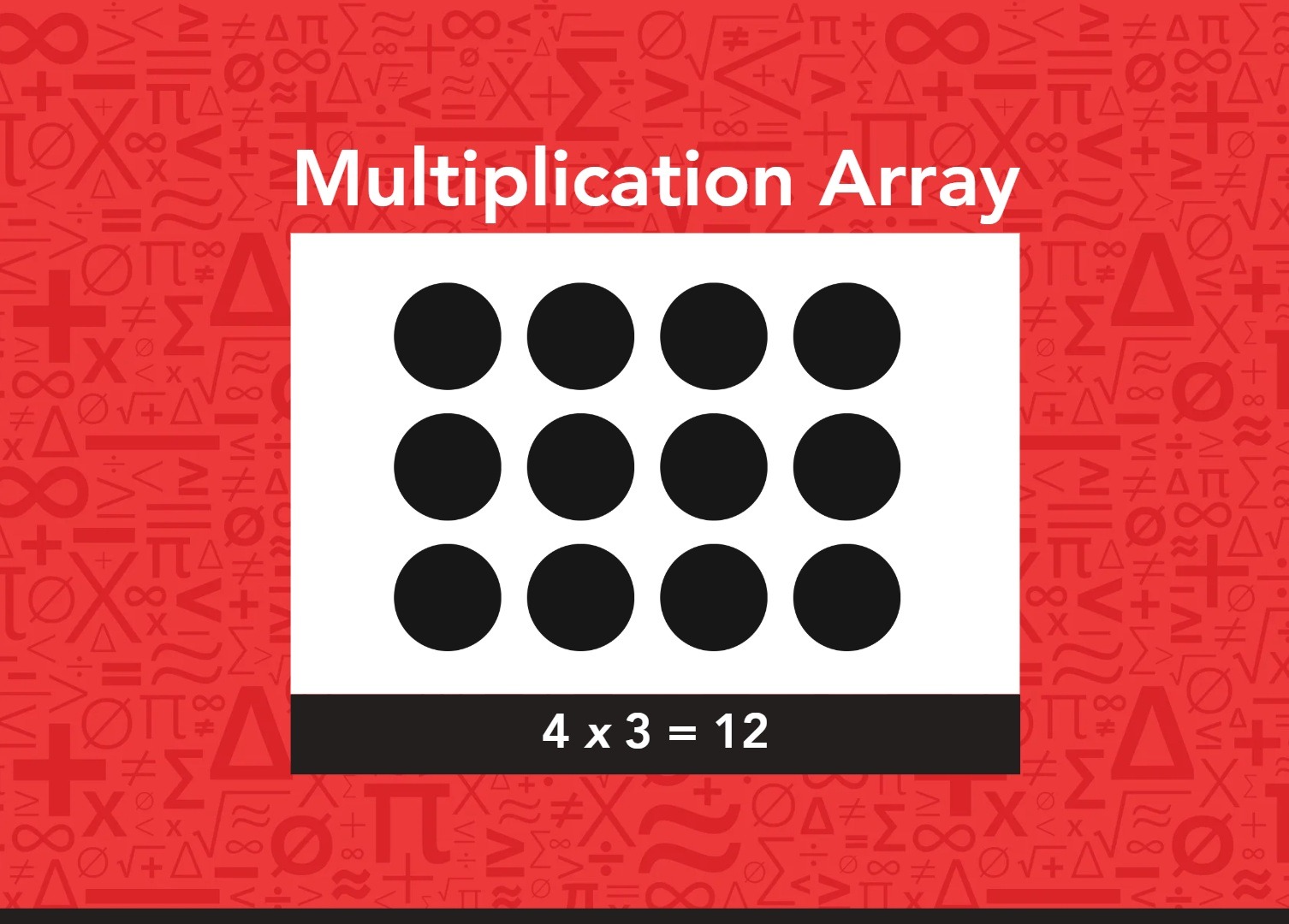
If your child can recall a multiplication fact but is unsure what it represents, equal groups, counters or arrays can help them visually connect the calculation with the quantities involved. For instance, four columns of three dots represent four equal groups of three, which can be written as 4 × 3 = 12.
Your child’s teacher can also add useful context if the same problem appears across several tables, because they can compare what you are seeing at home with your child’s work in class and explain which multiplication skills they are currently developing.
If the cause is still unclear, more targeted support can identify which parts of multiplication your child understands and where the gaps are.
📕 You May Also Like: How to Help Your Child Through Their Maths Homework Without the Stress
 At Mathnasium, we meet children where they are in maths, whether they need to catch up, keep up or get ahead.
How Mathnasium Helps Children Build Times Tables Fluency and Beyond
Mathnasium is a maths-only learning centre dedicated to helping students of all skill levels excel in maths.
Whether your child needs help becoming fluent with times tables, has gaps in the multiplication concepts behind those facts or needs support in another area of maths, we can help them.
We deliver that support through the Mathnasium Method™, our proprietary teaching approach designed to help children build maths mastery through deep understanding. Our approach includes:
-
Assessment and customised learning plans. Every child begins their Mathnasium journey with a diagnostic assessment that identifies what they already know and where gaps remain. We use the insights to create a bespoke learning plan that addresses those gaps, builds on existing knowledge and provides greater challenge where appropriate.
-
Teaching for understanding. Our specially trained instructors teach children how and why maths works rather than simply asking them to memorise methods. They use mental, verbal, visual, tactile and written techniques to explain concepts in different ways and develop mathematical thinking.
-
Face-to-face instruction. Children work face-to-face with specially trained instructors in a caring and fun group environment, following their own learning plan at a pace that suits them. Families can choose between in-centre and live online instruction, depending on the options available through their centre.
-
Continued progress and confidence. We monitor your child’s progress as they work through their learning plan and continue building from what they understand. As maths becomes clearer, children can feel more comfortable approaching new problems and more confident in their own mathematical thinking.
The impact extends beyond the classroom:
-
94% of parents report an improvement in their child's maths skills and understanding
-
93% of parents report their child's improved attitude towards maths after attending Mathnasium
-
90% of students saw an improvement in their school grades
With over 1,250 centres worldwide and over 40 across the UK, there is likely a Mathnasium centre near you.
Families across Clapham, Battersea, Wandsworth and Balham trust Mathnasium of Clapham to help their children build lasting maths confidence.
If your child needs help with times tables or support with another area of maths, our team is ready to help.
✉️ Click Contact Us to get in touch with Mathnasium of Clapham
Not near Clapham?
📍 Find a Mathnasium Centre Near You


 0207 0787 000