Children learn that with whole numbers, 5 is less than 8, for example, but when they encounter negative integers, they find that −5 is greater than −8. For some children, comparisons like this can make negative numbers difficult to understand at first.
In England, children begin counting backwards through zero in Year 4, learn to interpret negative numbers in context in Year 5 and calculate intervals across zero in Year 6. At Key Stage 3 (Years 7–9), they extend their understanding to calculations involving positive and negative numbers.
As these calculations become more demanding, familiar expectations about addition, subtraction and multiplication may no longer hold. We'll look at what negative numbers are, why they can cause confusion and how children can make sense of them.

What Are Negative Numbers?
Negative numbers are values less than zero. We use zero as a reference point to describe quantities such as temperature, where −4°C means four degrees below 0°C. The negative sign (−) indicates that the value is below this reference point, while its magnitude tells us the distance from it.
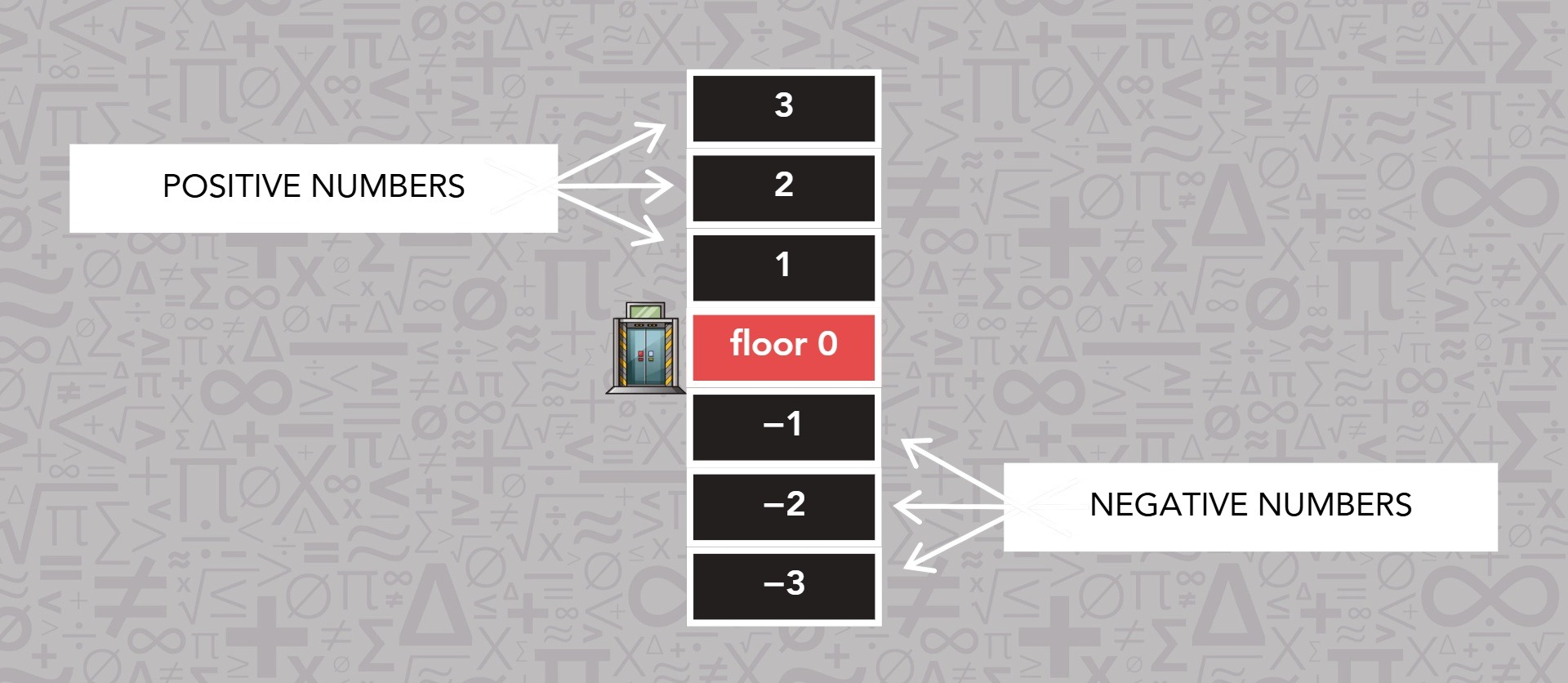
Consider a lift in a building where the ground floor is labelled 0. Floors above ground are numbered 1, 2, 3, while those below ground are labelled −1, −2, −3. If the lift travels from floor −3 to floor 3, it moves six floors upwards, crossing ground level along the way.
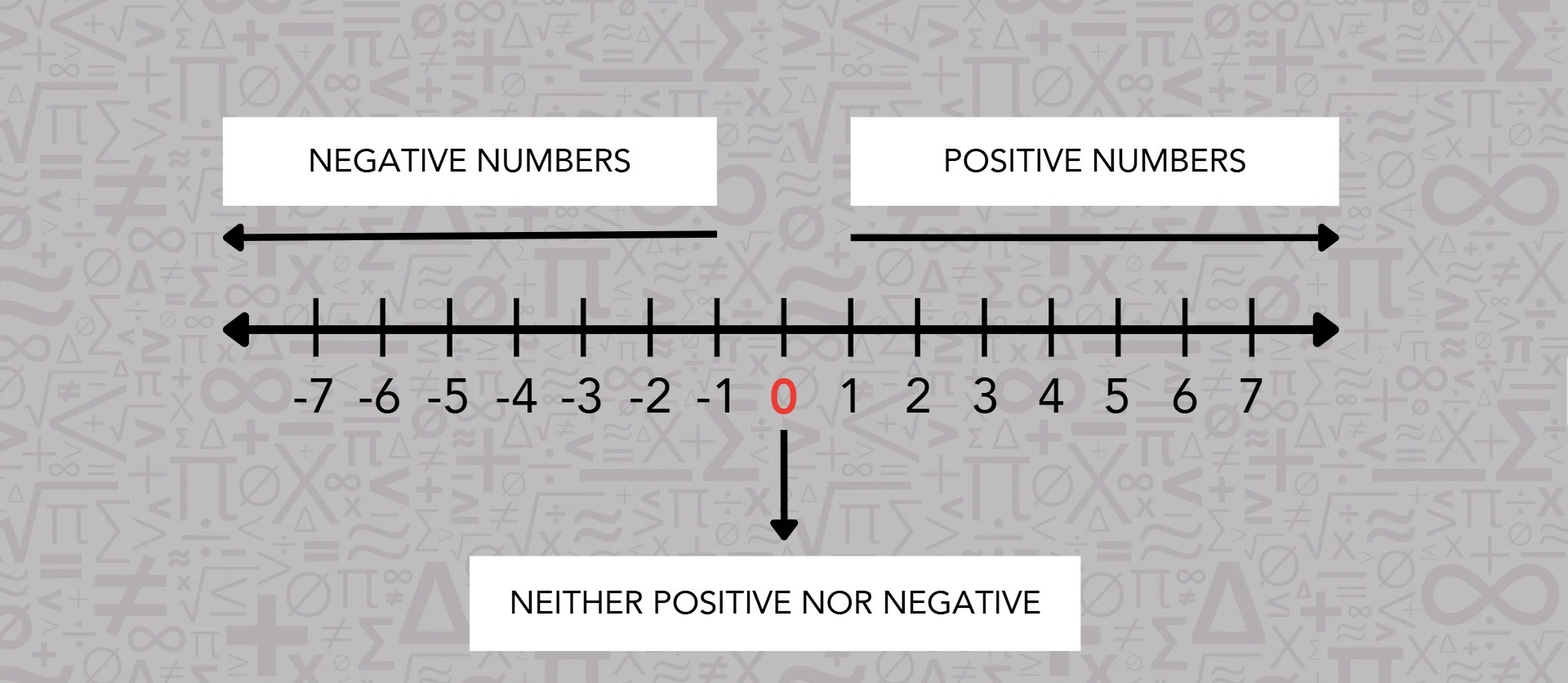
We can represent the same ordering on a horizontal number line, where negative values appear to the left of zero and positive values to the right. Numbers increase as we move right and decrease as we move left. Zero is neither positive nor negative, and every number has a position that helps us compare its value with others.
📕 You May Also Like: Number Sense: The Foundation of Primary School Maths
Why Can Children Find Negative Numbers Confusing?
Children usually learn to work with positive numbers before they encounter negative values, so some of their existing assumptions about how numbers behave may no longer apply.
Let's look at three common difficulties and the mathematical reasoning behind them.
1. Negative Numbers Can Be Difficult to Compare
With positive numbers, a greater magnitude also means a greater value. For negative numbers, the relationship is reversed. For example, −9 is less than −4, even though 9 is greater than 4.
We can check this on a number line by looking at each number's position relative to zero. Since −9 lies to the left of −4, it has a smaller value despite being further from zero.
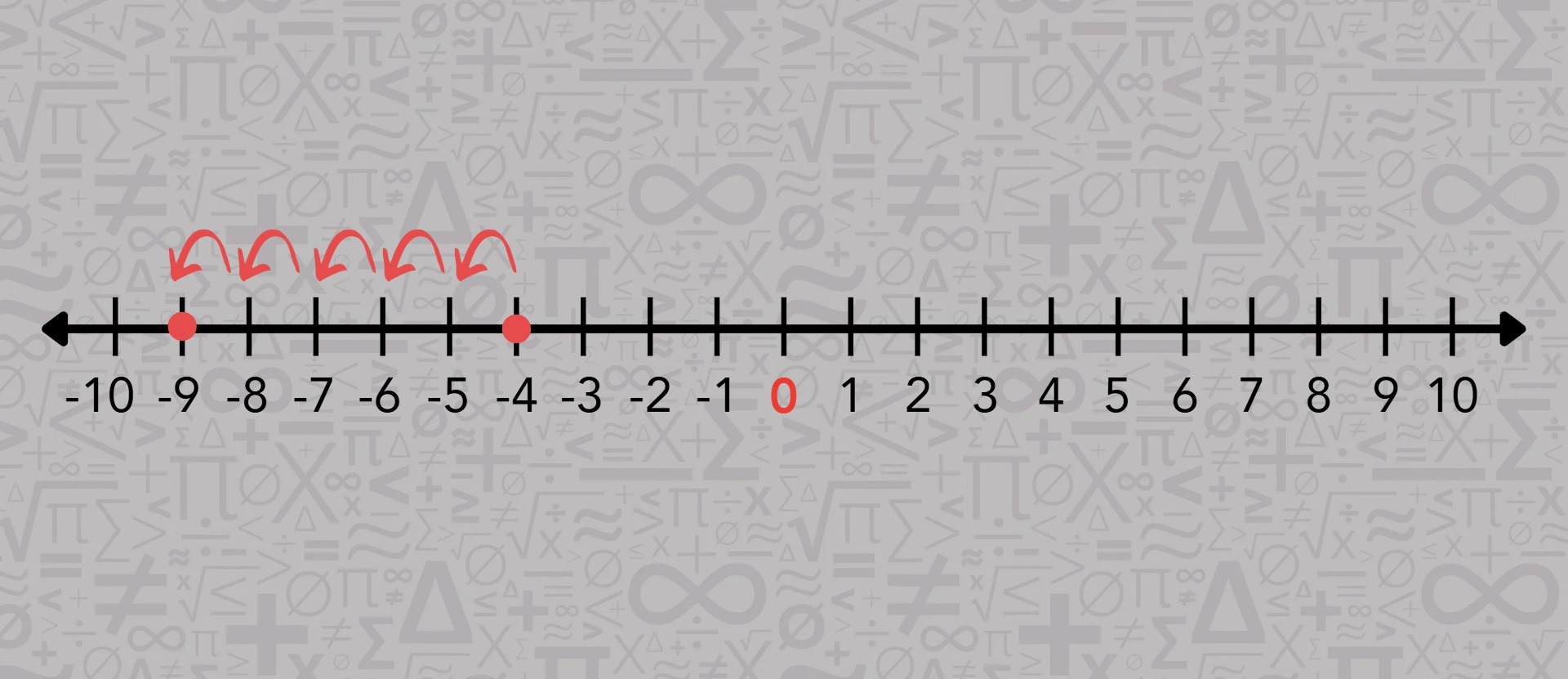
If children compare only the digits, they may mistake a greater magnitude for a greater value.
2. Addition and Subtraction Can Challenge Familiar Rules
Children learn addition by combining quantities and subtraction by taking quantities away. They may therefore assume that addition always increases a number and subtraction always decreases it.
England's KS3 maths guidance identifies this assumption as a potential misconception when children calculate with negative numbers.
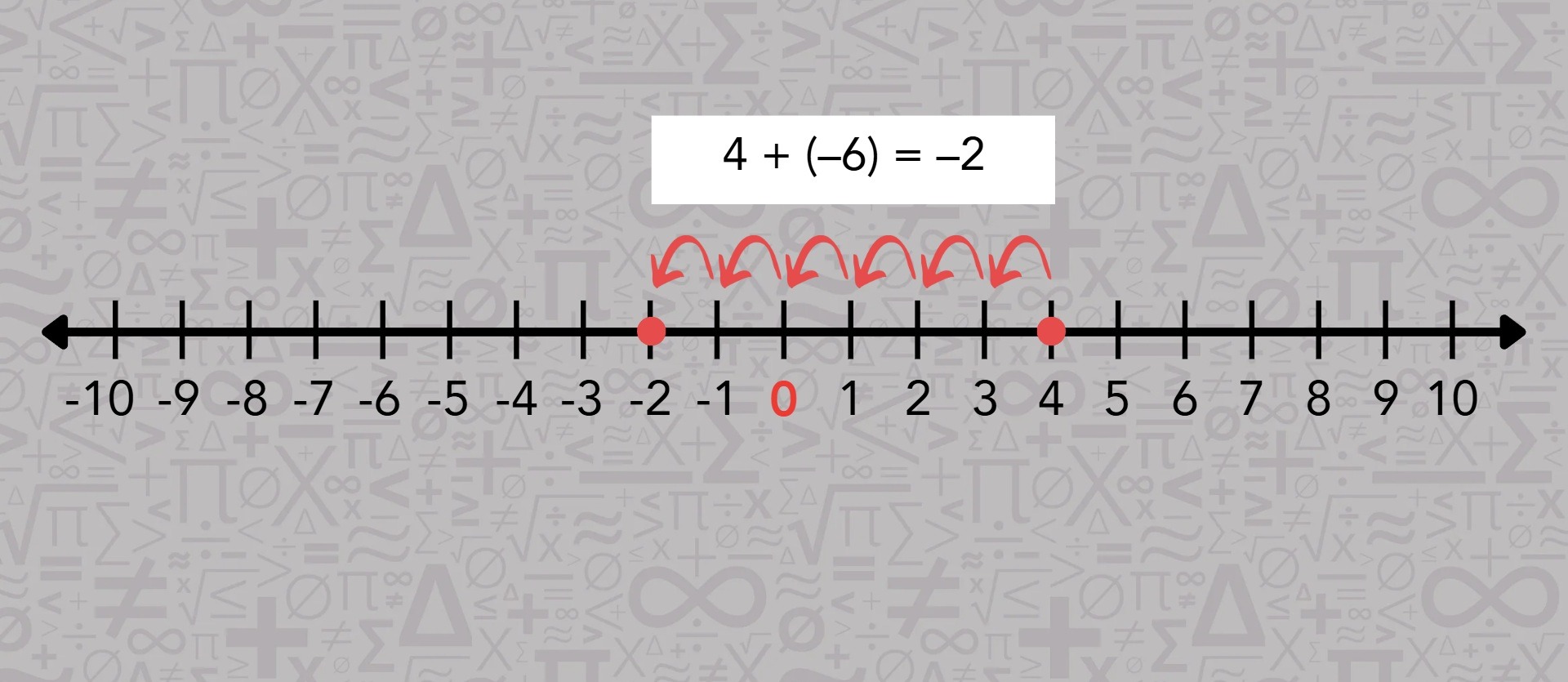
For example, let's calculate 4 + (−6). Since adding a negative number is equivalent to subtracting its positive counterpart, we can rewrite the calculation as 4 − 6.
On the number line, we start at 4 and move six places to the left. After four places, we reach zero, and the remaining two take us to −2. So, 4 + (−6) = −2, because we have moved past zero.
Now let’s look at 4 − (−6) = 10. Here, we subtract negative six from four. Since subtracting a number is equivalent to adding its opposite, we can rewrite the calculation as 4 + 6 = 10. On the number line, this takes us six places to the right, so the answer increases by six.
Notice that the two minus signs in 4 − (−6) have different meanings. The first indicates subtraction, while the second identifies −6 as a negative number. We need to account for both to understand why the result is 10.
3. Multiplication Rules Can Be Easy to Misapply
When we multiply two negative numbers, we get a positive result. The reason becomes clearer when we examine how multiplication follows a consistent pattern.
For (−4) × 3, we multiply negative four by three to get −12. Now we keep the first factor at −4 and reduce the second factor by one each time. As the second factor decreases by one, the product increases by four, following the same pattern even when the second factor becomes negative:
-
(−4) × 2 = −8
-
(−4) × 1 = −4
-
(−4) × 0 = 0
-
(−4) × (−1) = 4
-
(−4) × (−2) = 8
-
(−4) × (−3) = 12
The product reaches 0 when the second factor is 0, but it continues increasing by four as that factor becomes negative. This is why (−4) × (−3) = 12, as the same multiplication pattern continues to produce increasing values when both factors are negative.
However, the familiar rule “two negatives make a positive” applies to multiplication and division, not addition. For instance, −4 + (−3) = −7. Here, we start at −4 and move three more units left on the number line because we are adding negative three. So, the result is −7, not positive seven.
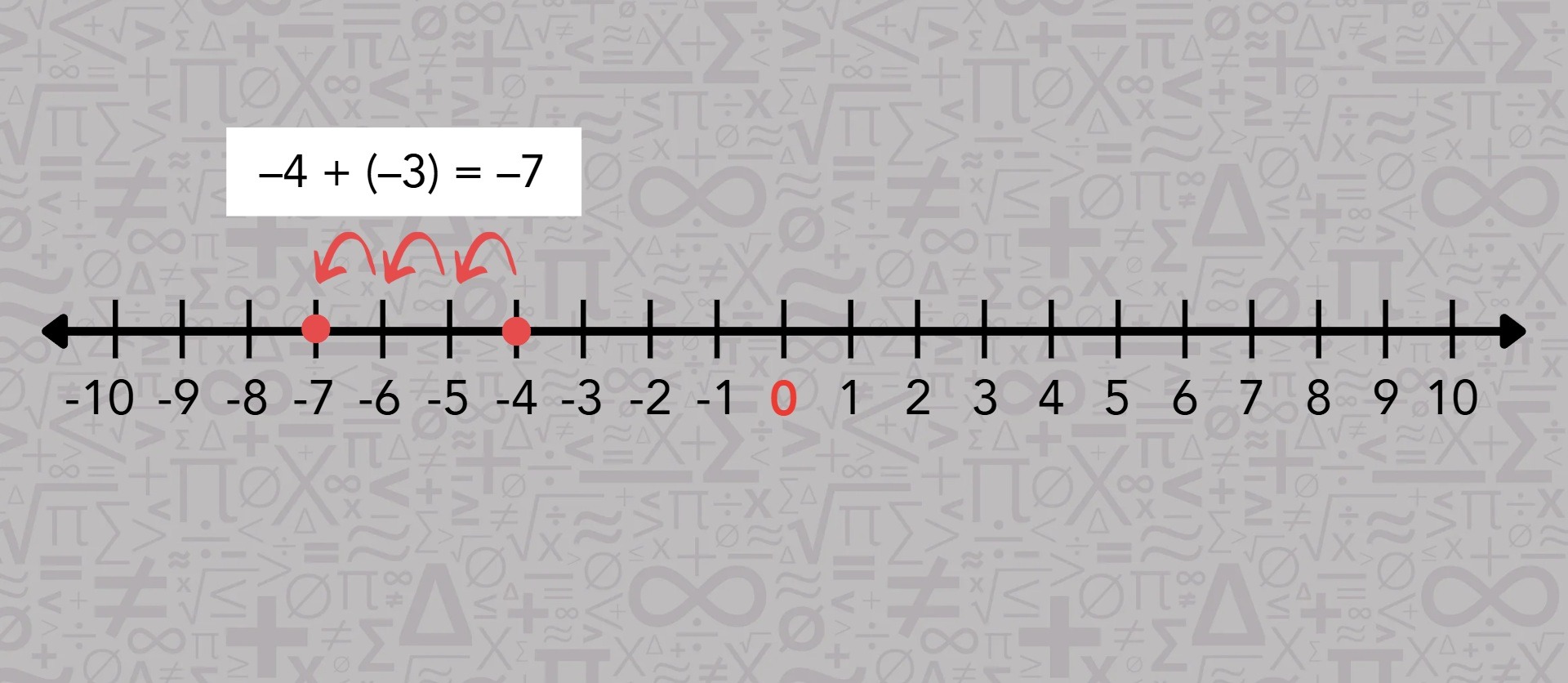
The operation determines how the negative signs affect the result, which is why we cannot use a multiplication rule for addition.
📕 You May Also Like: Factors and Multiples: What They Are and Why Children Mix Them Up
How Can Children Make Sense of Negative Numbers?
We can make sense of negative numbers by checking how a calculation changes the starting value and whether the result fits what we already know about numbers. Rather than applying a sign rule immediately, we can use mathematical relationships to reason through the answer.
Here are three ways to put that reasoning into practice.
- Predict the result before calculating. Before working out the exact answer, we can estimate whether it should be positive or negative, or greater or smaller than the starting number. For example, −8 + 3 must be greater than −8 because we are adding a positive number, although the result remains negative because three steps towards zero are not enough to reach it.
- Check answers using another method. An inverse operation can help us verify a calculation. If −8 + 3 = −5, subtracting 3 from −5 should return us to −8. Since −5 − 3 = −8, the check confirms our answer.
- Explain why the answer makes sense. We can connect the calculation to an equivalent expression. Since adding 3 to −8 is the same as finding the difference between 8 and 3 and keeping the negative sign, −8 + 3 = −(8 − 3) = −5. The negative result follows because the negative quantity has the greater magnitude.
We can extend this reasoning to other additions involving numbers with opposite signs. If their magnitudes are different, the number with the greater magnitude determines whether the result is positive or negative. If their magnitudes are equal, the result is zero.
📕 You May Also Like: Column Method: How to Add and Subtract Step by Step
 At Mathnasium, our instructors help children understand how and whymaths works, building confidence along the way.
How Mathnasium Helps Children Understand Negative Numbers and Beyond
Mathnasium is a maths-only learning centre dedicated to helping students of all skill levels excel in maths.
Whether your child finds negative numbers confusing or needs support with maths more broadly, we can support them. Our instructors teach children how and why maths works, helping them understand concepts such as negative numbers and build confidence in their mathematical abilities.
We do this through the Mathnasium Method™, our proprietary teaching approach designed to build maths mastery through deep understanding.
Our approach includes:
-
Assessment and customised learning plans. Every child begins their Mathnasium journey with a diagnostic assessment that identifies what they already know and where gaps remain. We use the results to create a bespoke learning plan that addresses those gaps, builds on existing knowledge and provides greater challenge where appropriate.
-
Teaching for understanding. Our specially trained instructors explain how mathematical ideas work and use mental, verbal, visual, tactile and written techniques to support understanding. They can also use questions to encourage children to think through relationships and explain their reasoning independently.
-
Face-to-face instruction. Children work face-to-face with specially trained instructors and follow their own learning plan at a pace that suits them. Families can choose between in-centre and live online instruction, depending on the options available through their centre.
-
Confidence and engagement. Sessions include games and earned rewards, so children actively participate, solve problems and engage with maths instead of simply listening to a lesson. They build confidence alongside fluency and many develop a more positive relationship with maths.
The impact extends beyond the classroom:
-
94% of parents report an improvement in their child's maths skills and understanding
-
93% of parents report their child's improved attitude towards maths after attending Mathnasium
-
90% of students saw an improvement in their school grades
With over 1,250 centres worldwide, including over 40 across the UK, there is likely a Mathnasium centre near you.
Families across Crouch End, Highgate, Hornsey and Alexandra Park trust Mathnasium of Crouch End to help their children build lasting maths confidence.
If negative numbers or any other maths topic is a challenge, our team is ready to help.
✉️ Click Contact Us to get in touch with Mathnasium of Crouch End
Not near Crouch End?
📍 Find a Mathnasium Centre Near You


 020 300 49404