Year 3 marks the start of Key Stage 2, where maths builds more extensively on the knowledge children developed in their first years of primary school. Some concepts become more demanding, while earlier skills support several new areas of learning.
If your child starts finding maths more difficult at this stage, the reason may be much more specific than maths as a whole.
To understand what may be behind those struggles, we’ll look at why Year 3 can become more challenging, where children may encounter new demands and the signs that can help you recognise what your child is finding difficult.
Why Can Some Children Find Year 3 Maths More Difficult?
In Year 3, children develop greater fluency with whole numbers and the four operations while learning to use more efficient mental and written methods. The National Curriculum for mathematics also expects them to solve a wider range of problems and make connections between mathematical ideas.
More specifically, the DfE’s Year 3 mathematics guidance sets out Year 2 knowledge as a “conceptual prerequisite” for Year 3 learning. In practice, children need to use earlier understanding as they work towards new Year 3 expectations.
For example:
-
To understand place value in three-digit numbers, children draw on what they already know about tens and ones.
-
Fluency with addition and subtraction facts supports calculations with larger numbers.
-
Earlier multiplication knowledge supports the new multiplication and division work introduced in Year 3.
The curriculum recognises how much this progression depends on what children already understand. It states that decisions about when to progress should be based on the “security” of their understanding and that children who are not sufficiently fluent with earlier material should consolidate it before moving on.
📕 You May Also Like: Multiplication Tables Check 2026: A Guide to Year 4 Times Tables
Where Can Year 3 Maths Become More Challenging?
Year 3 develops several areas of number work beyond the level children met in Year 2. Four areas in particular bring new calculations, representations and relationships into their maths.
1. Place Value Beyond 100
Children extend their place value knowledge to three-digit numbers, learning to recognise the value of each digit, compare and order numbers up to 1,000 and find 10 or 100 more or less than a given number.
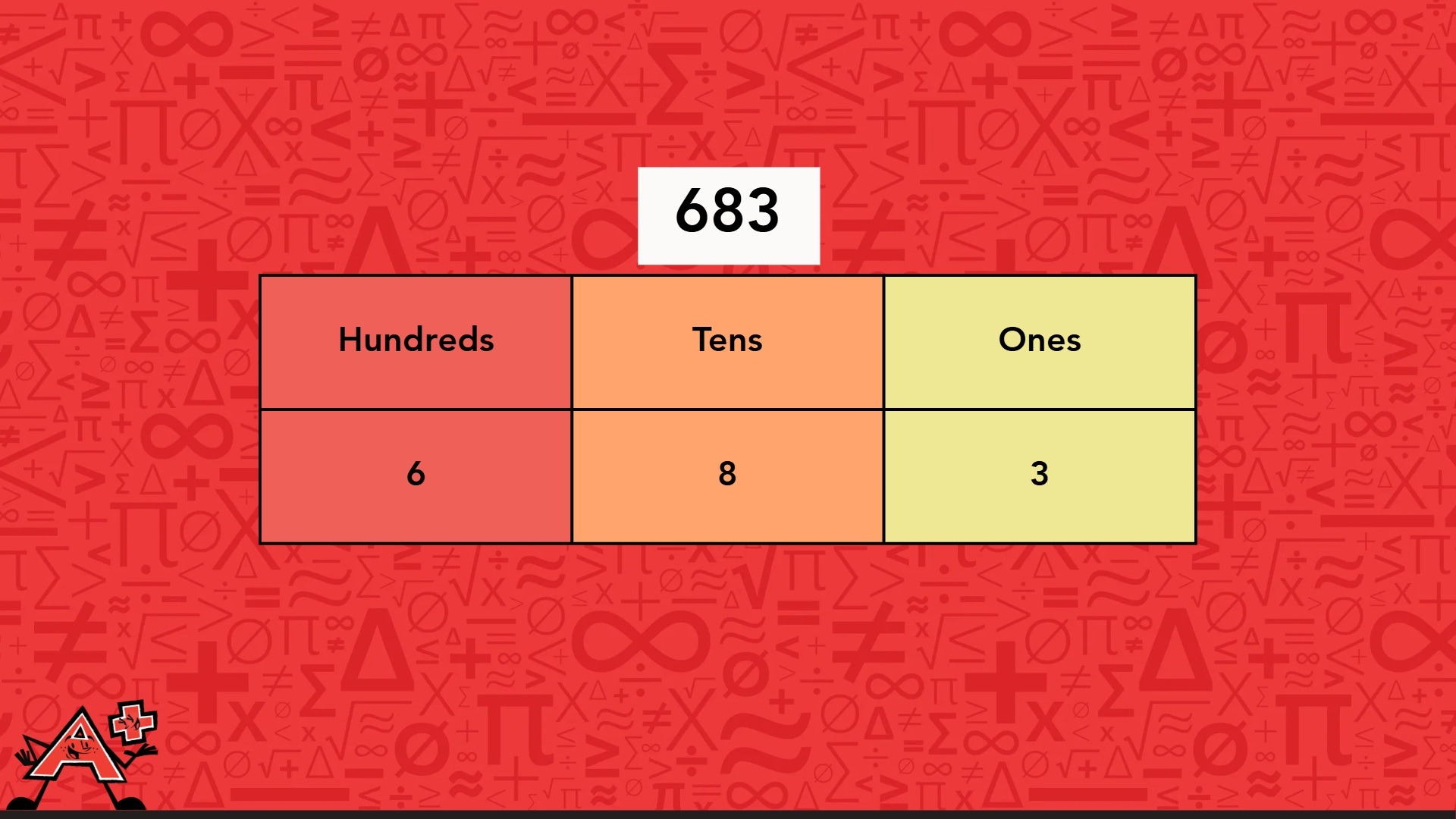
In 683, for example, the 6 is in the hundreds place and represents 600, the 8 is in the tens place and represents 80 and the 3 is in the ones place and represents 3. To work confidently with three-digit numbers, children need to recognise how each digit’s position determines its value, rather than simply reading the digits from left to right.
Children then learn that they can break the same number apart in different ways while keeping its value unchanged. For example, 146 = 100 + 40 + 6, but it can also be partitioned as 130 + 16. This flexibility becomes useful when children start choosing more efficient ways to calculate with larger numbers.
📕 You May Also Like: What Is Place Value and Why Does It Underpin KS2 Maths?
2. Column Addition and Subtraction
Formal column addition and subtraction become part of the Year 3 curriculum for numbers with up to three digits. Children still use mental calculation, but they now learn how to organise larger calculations vertically and use place value correctly within the written method.
For example, in 243 + 35, the 5 in 35 lines up with the 3 in 243 because both are in the ones column, while the 3 in 35 lines up with the 4 in 243 because both are in the tens column. This alignment reflects the value of each digit, which is why column methods depend so closely on place value.
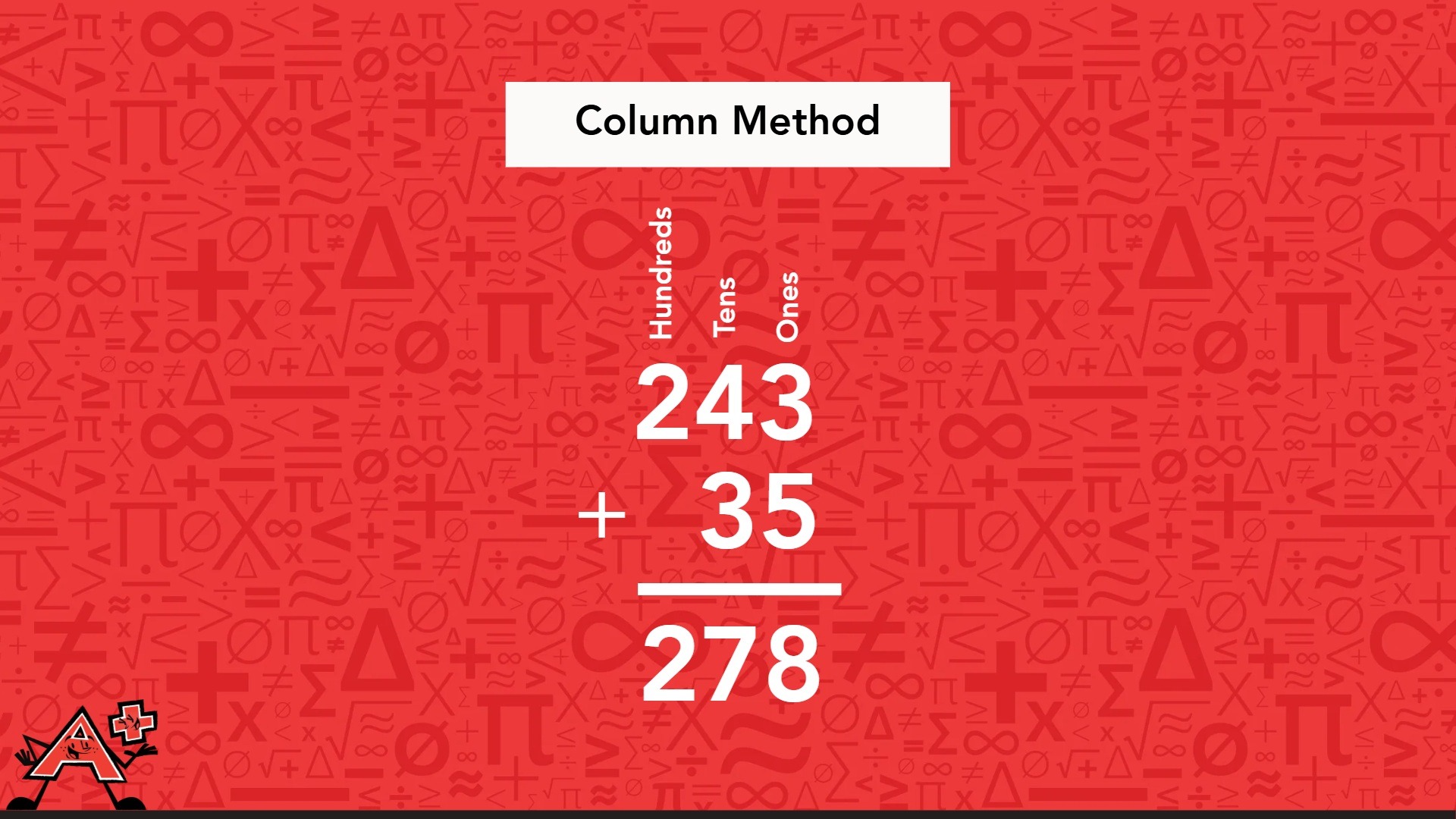
The DfE guidance specifically identifies recognising place value in two- and three-digit numbers as a prerequisite for adding and subtracting up to three-digit numbers using columnar methods.
📕 You May Also Like: Column Method: How to Add and Subtract Step by Step
3. The 3, 4 and 8 Times Tables
Children enter Year 3 having already worked with the 2, 5 and 10 times tables. They now learn to recall multiplication and division facts for the 3, 4 and 8 times tables and use them to solve calculations and problems.
DfE guidance shows that children can use the 2 times table they learned in Year 2 to work out the 4 and 8 times tables by doubling a 2 times table fact to find the corresponding 4 times table fact, then doubling the result to find the 8 times table fact:
-
2 × 6 = 12
-
4 × 6 = 24
-
8 × 6 = 48
Multiplication and division are inverse operations, so children learn to connect each multiplication fact with its related division facts. If 4 × 6 = 24, they can use the same relationship to work out 24 ÷ 4 = 6 and 24 ÷ 6 = 4. In terms of equal groups, 24 can be divided into 4 groups of 6 or 6 groups of 4.
4. Fractions Beyond Familiar Shapes
Year 2 already introduces children to fractions of shapes, lengths, sets and quantities, as well as simple equivalence such as \(\Large\frac{2}{4}\) = \(\Large\frac{1}{2}\).
Year 3 takes that understanding further by asking children to work with unit and non-unit fractions, count in tenths, recognise equivalent fractions and compare and order unit fractions and fractions with the same denominators.
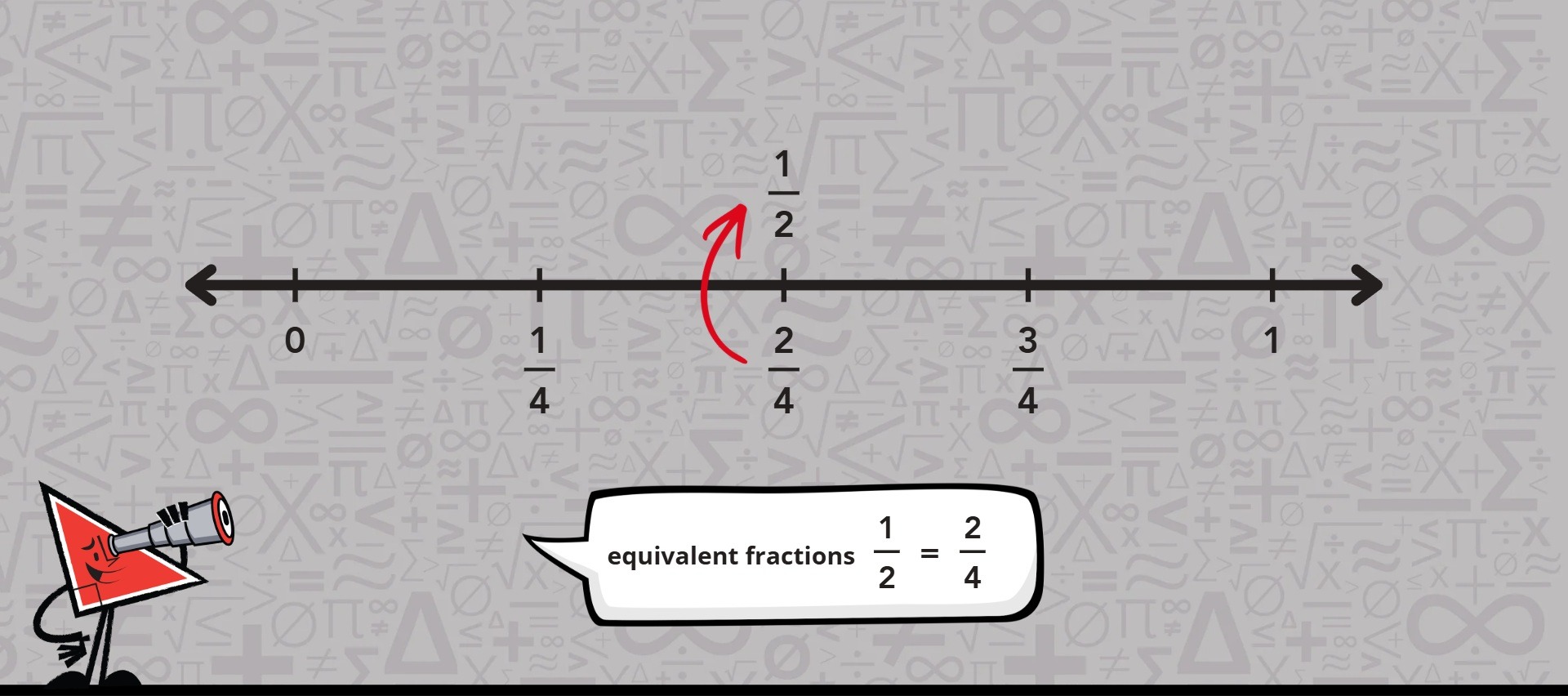
Children also develop their understanding of fractions as numbers on a number line. For example, \(\Large\frac{3}{4}\) represents a number with its own position and value, while equivalent fractions such as \(\Large\frac{1}{2}\) and \(\Large\frac{2}{4}\) occupy the same point.
📕 You May Also Like: Why Fractions, Decimals & Percentages Confuse Your Child
What Can Year 3 Maths Struggles Look Like?
Year 3 maths struggles can often become noticeable in how children recall number facts, use methods they have learned and solve problems independently.
From our work with children at Mathnasium, we know that repeated difficulties in these areas can point to maths skills or concepts that need more attention.
Certain habits in your child’s maths work can give you clues about where they may need more support:
-
Your child still counts through familiar calculations. For addition and subtraction, they may move one number at a time to reach the answer. With times tables, they may go through the sequence 4, 8, 12, 16, 20, 24 to work out 6 × 4 instead of recalling 24 directly.
-
Children may follow the steps without fully understanding why they work. They might know how to complete a calculation but struggle to explain the maths behind the method or use it when the question changes. This can become more noticeable in Year 3 as children learn new methods and use earlier knowledge in more complex calculations.
-
Earlier facts are difficult to use in new calculations. Some children can recall 4 × 8 = 32 but do not immediately connect it with the related division facts 32 ÷ 4 = 8 or 32 ÷ 8 = 4. Year 3 increasingly asks children to use known facts and mathematical relationships as they work with new material.
-
Some problems are harder to solve independently. Your child may know how to add, subtract, multiply or divide but find it harder to decide which operation the problem requires. They may need help interpreting the problem and choosing how to approach it.
As your child works through their regular maths work, you may notice that they get stuck on the same types of questions or make similar mistakes. When a pattern starts to emerge, it may be useful to find out which gap in understanding is behind it.
At Mathnasium, we use a diagnostic assessment to identify those gaps. The assessment includes verbal and written activities across different maths skills and concepts, which gives our instructors the information they need to create a customised learning plan.
📕 You May Also Like: How to Help Your Child Through Their Maths Homework Without the Stress
 At Mathnasium, we help children make sense of mathematical concepts, building their knowledge step by step and developing the skills they need to progress with confidence.
How Mathnasium of Barnet Helps Children Build Solid Maths Foundations
Mathnasium is a maths-only learning centre dedicated to helping students of all skill levels excel in maths.
At our Barnet centre, we support children across a local school community with consistently high academic attainment. In 2026, 41% of students in Barnet achieved GCSE grades 7 or above, compared with 28.6% across London and 21.8% nationally, according to Barnet Council.
Solid maths foundations from primary school give children the understanding they need as the subject develops through later years.
Our work with primary-school children focuses on building understanding step by step across areas such as addition and subtraction, multiplication and division and fractions. Primary school maths at Mathnasium builds on what each child already knows while addressing areas where they need more support.
We deliver that support through the Mathnasium Method™, our proprietary teaching approach designed to help children develop a deep understanding of mathematical concepts. Each child begins their Mathnasium journey with a diagnostic assessment that identifies their strengths and any gaps in understanding.
The results guide a bespoke learning plan based on what your child already knows and what they need to learn next. Our specially trained instructors then teach children how and why maths works, using mental, verbal, visual, tactile and written techniques to present concepts in different ways.
Children work face-to-face with our instructors and follow their own learning plan at a pace that is right for them. Mathnasium of Barnet supports children from Reception through to GCSE at 4 Hadley Parade, High Barnet, as well as online through Mathnasium@home.
The impact extends beyond the classroom:
-
94% of parents report an improvement in their child's maths skills and understanding
-
93% of parents report their child's improved attitude towards maths after attending Mathnasium
-
90% of students saw an improvement in their school grades
With over 1,250 centres worldwide, including over 40 across the UK, there is likely a Mathnasium centre near you.
Families across Hadley Wood, Chipping Barnet, High Barnet, Arkley, Monken Hadley, Potters Bar, New Barnet and East Barnet trust Mathnasium of Barnet to help their children build lasting maths confidence.
If Year 3 maths, or any other topic, is giving your child trouble, our team is ready to help.
✉️ Click Contact Us to get in touch with Mathnasium of Barnet
Not near Barnet?
📍 Find a Mathnasium Centre Near You


 020 3965 9876